
Tech
Watch the closeup moment they opened the Artemis II hatch after splashdown


When people watched NASA's Artemis II mission return to Earth, they saw helicopter views of little orange-clad figures exiting the spacecraft onto a raft.
But the U.S. space agency has since released a short closeup video of the Navy recovery team as it opened the hatch on Friday, April 10. The trained divers and medical officers entered the tiny 330 cubic-foot Orion capsule, greeted the four astronauts.
From video cameras mounted on the recovery team's helmets, shown in the X post below, it's as if you're right there with them. The team cheers and claps, with shouts of "let's go!" followed by "four green" (a callout that the crew was OK).
"Welcome home," the recovery team said to the Artemis II crew, Commander Reid Wiseman, Victor Glover, Christina Koch, and Jeremy Hansen, the first humans to fly around the moon since 1972.
This Tweet is currently unavailable. It might be loading or has been removed.
Up close, the spacecraft, dubbed Integrity by the crew, appeared battered and singed as it bobbed in the Pacific Ocean off the coast of San Diego, California. The capsule had just plummeted through Earth's atmosphere, a fiery descent that put the crew through a 25,000 mph ride.
During that intense and dangerous phase, the astronauts experienced nearly 4Gs, a pressure pushing against them equal to four times their bodyweight. Without proper training, those conditions, coupled with adrenaline overload, could cause a person to blackout.
But as the recovery team soon discovered, not only was the returning crew healthy, they were in high spirits, smiling as they waited through the procedures to leave the spacecraft. At the end of the video, one of the recovery officials, referred to as "Vlad," said he had something for Wiseman. The clip ends before that "something" is revealed.
"Jesse, Steve, Laddy, and Vlad….such an incredible feeling to welcome you aboard Integrity after a nearly 700,000 mile journey," Wiseman said in a post on X. "Forever thankful for your service to our crew and the nation."
What is clear is that the people who welcomed Artemis II back to Earth seemed just as exhilarated as the astronauts themselves. Before climbing inside the crew's living quarters for the 10-day journey, the team almost forgot to place the seal cover over the bottom edge of the hatch in their haste to see their friends.
Artemis II, which launched April 1, marked NASA's triumphant return of human-led space exploration. It planned the voyage as the critical shakeout cruise for the spacecraft before the agency attempts to land on the moon. During the flight, the Artemis II crew put Orion through its paces, testing everything from propulsion and communications to how well humans can live, work, and make scientific observations far from home.

Credit: NASA / Bill Ingalls
Packed with cameras, sensors, and experiments, the mission turned the crew into both test pilots and test subjects, gathering data to shape future Artemis voyages. A successful journey vets the hardware and flight controllers for a moonwalk planned for 2028.
NASA isn't just motivated to get back to the moon for the moon's sake but to practice keeping humans alive in another world for extended periods. That's crucial before sending astronauts on a months-long spaceflight to Mars, perhaps possible in the late 2030s.
A new space race also sets the timeline for the Artemis campaign. The United States wants to land on the moon again before China, which is extremely close to achieving its first human moon landing.
If you thought the splashdown meant Wiseman, Glover, Koch, and Hansen could finally relax, you'd be wrong. Just hours after landing, NASA tested the crew's mettle again with an obstacle course.
Want more science and tech news delivered straight to your inbox? Sign up for Mashable's Light Speed newsletter.


SAVE $90: As of April 22, get the DJI Neo Fly More Combo for $259 at Amazon, down from its usual price of $349 with an on-page coupon. That's a discount of 26%.

Opens in a new window
Whether you're looking to get into flying drones or just want to add another to your collection, DJI is the brand to shop. Despite news of DJI drones being banned in the United States, there are still ways to get around the ban if you look hard enough. You can still keep the drones you own, and you can still shop those on sale at retailers like Amazon. And we've got one that you can snap up right now for an excellent price.
As of April 22, get the DJI Neo Fly More Combo for $259 at Amazon, down from its usual price of $349 with an on-page coupon. That's $90 off and a discount of 26%.
This bundle includes the DJI Neo drone, a remote controller, RC cable, flight battery, two-way charging hub, propeller guards, spare propellers, spare propeller screws, a screwdriver, gimbal protector, and a Type-C to Type-C cable.
The DJI Neo Fly More Combo is a lightweight and simple to fly option for users of any skill level. It's lighter than your phone, in fact, and small enough that you don't need to register with the FAA to fly it. You can use your phone to operate it, and it can take off from your hand with a single button push, so it's already simple to use right out of the box.
You can just fly the drone around, or you can take photos from a bird's eye point of view with smart subject tracking and quickshots that your drone can take all on its own. You can also control it via voice or RC depending on your preference.
With 4K ultra stabilized video, you can also stack plenty of crisp, high definition video while flying, all without complex setups that confuse and potentially frustrate.
if you're ready to get into drone photography or just want a chance to fly one without breaking the bank, this combo is well worth splurging on.

Google just made life a tiny bit easier for Android users who love to travel.
9to5google spotted a new lock screen widget for Android 16 that gives you persistent progress updates on your flights. It's very simple and straightforward: It shows your departing airport, your destination airport, your estimated arrival time, and a progress bar measuring how deep into the flight you are.
As 9to5google noted, this is on top of some already-existing features for travelers who add their boarding passes to the Google Wallet app. Those include push notifications about flight changes, but the flight progress widget is brand-new, having been promised by Google last year.
If you want to try it, well, you'd better have a flight lined up first. Add the boarding pass to Google Wallet, and the widget should appear shortly before takeoff. In other words, you don't really have to do anything other than put your boarding pass in your phone.
This marks another step forward for Google Wallet, which replaced Google Pay in 2024 as the go-to destination for credit cards and other important kinds of digital documentation on Android devices. By all accounts, it's been a successful transition for Android users, and if Google keeps adding neat little conveniences like this flight tracker widget, it'll only get better.

Meta is about to ramp up surveillance of its employees, Reuters reports, but in a very 2026 twist, it's not meant to catch people slacking off.
Reuters reports that Meta is installing tracking software that can capture mouse movements and keystrokes on U.S.-based employees' computers. While this sort of surveillance isn't unheard of in corporate America, the motivation here is slightly novel: Meta is reportedly going to use the data to train AI agents, per a company memo seen by Reuters.
This will be done through a tool called Model Capability Initiative, or MCI.
Meta's memo said the idea is to help AI agents improve at tasks they currently struggle with, such as using keyboard shortcuts. And in a different memo reportedly sent to employees on Monday, CTO Andrew Bosworth said to expect more internal data collection in order to make agents better at replicating human work. The goal, per Bosworth, is for agents to do most of the work while humans sit back and monitor the situation.
“The vision we are building towards is one where our agents primarily do the work and our role is to direct, review and help them improve," Bosworth said, per Reuters.
While Meta did not explicitly say any of this was meant to replace human workers down the line, it's reasonable to wonder if that's where this is eventually going. Tens of thousands of people lost their jobs because of AI last year, and Meta has already laid off a quadruple-digit number of people (though those were unrelated to AI) earlier this year, with more cuts coming later in May.
If, at some point in the future, Meta reduces its workforce with the aim of having AI agents do the work instead, it may have been those same Meta employees who trained the AI in the first place.
In the meantime, Reuters reports that Meta assured employees that the data will not be used in performance reviews.
Meta hasn't had a great year, privacy-wise, and we're only four months into 2026.
In March, the company was accused of sending Meta Ray-Ban user recordings, including intimate images, to offshore Meta workers, also for AI training. Earlier this month, we reported on the case of a former Meta employee under criminal investigation for downloading private Facebook photos. And after a report that Meta was planning to add facial recognition technology into its smart glasses, a group of 70 organizations, including the ACLU, signed a public letter urging Meta to reverse course.

Why an Unfinished Degree Can Help Your Resume (and How to List It)
South Florida Tops WalletHub List of 10 Best Cities to Start a Business
How Do I Respectfully Ask for the Raise I Was Promised? Ask Johnny

SEND IN THE TROOPS! At Least 5 Dead, 10 Wounded So Far in Chicago Weekend Shootings
How I Paid Off My Mortgage 10 Years Early On A Teacher’s Salary

Black Lives Matter Activist in Boston Pleads Guilty to Federal Fraud Charges – Scammed Donors to Fund Her Lifestyle
-
 Politics8 months ago
SEND IN THE TROOPS! At Least 5 Dead, 10 Wounded So Far in Chicago Weekend Shootings
-
Business7 months ago
How I Paid Off My Mortgage 10 Years Early On A Teacher’s Salary
-
 Politics7 months ago
Black Lives Matter Activist in Boston Pleads Guilty to Federal Fraud Charges – Scammed Donors to Fund Her Lifestyle
-

 Tech8 months ago
Get a lifetime subscription to the “ChatGPT for investors” for under $60
-

 Tech7 months ago
Review: The Dreame H15 Pro CarpetFlex is the first wet/dry vacuum I liked
-
Business8 months ago
25 Low-Effort Side Hustles You Can Start This Weekend
-
 Tech8 months ago
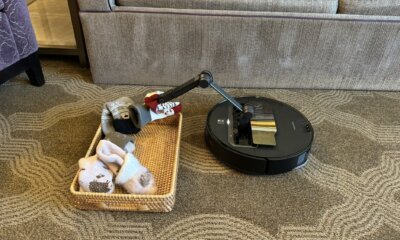
How much does the Roborock Saros Z70 cost? And does it ever go on sale?
-
Business8 months ago
9 Ways to Command a Six-Figure Salary Without a Bachelor’s