
Tech
Hamnet review: Paul Mescal and Jessie Buckley burn in William Shakespeare tragedy

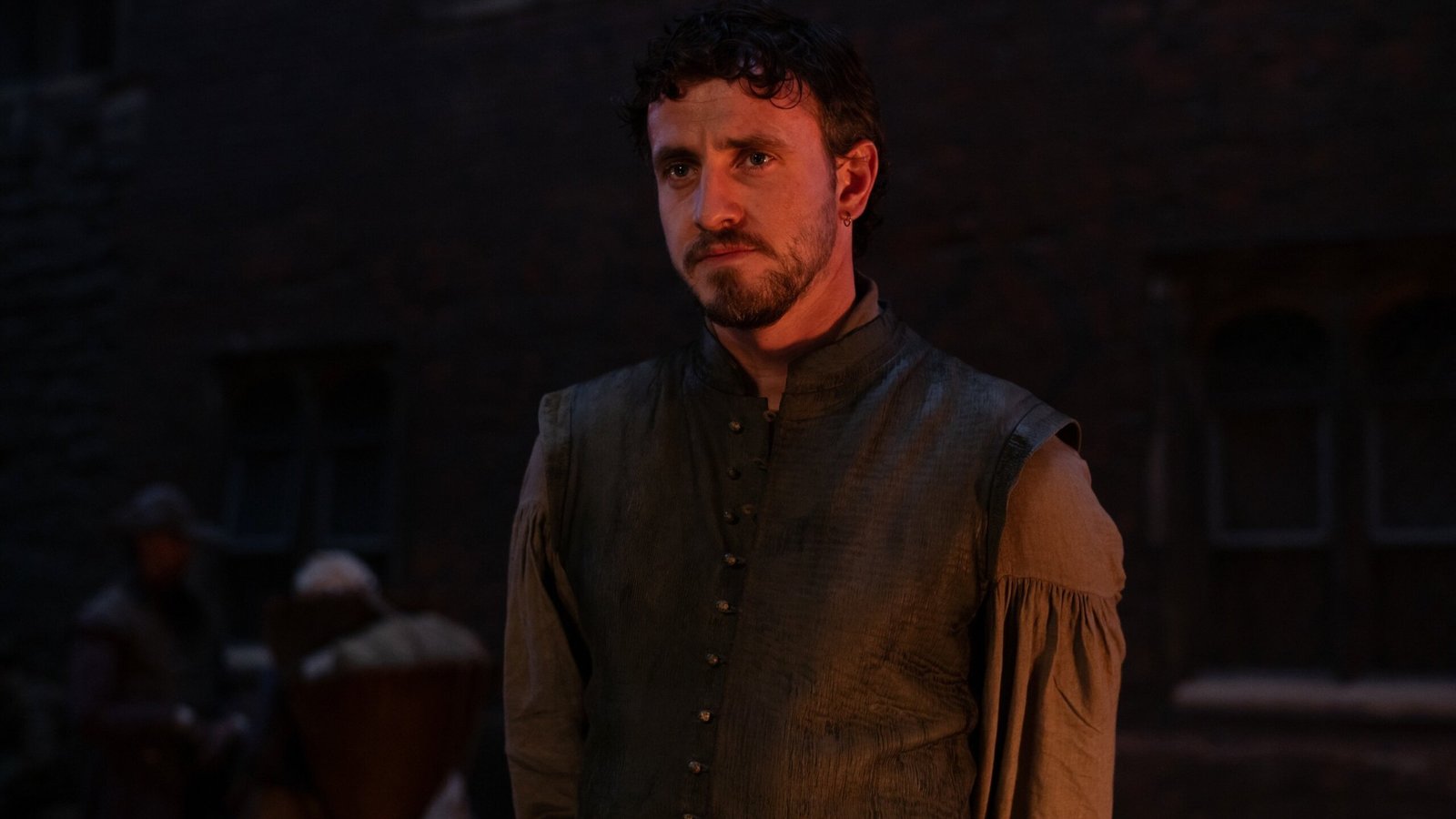
Before Hamlet, there was Hamnet. He was the young son of William Shakespeare who died in his youth, inspiring the playwright to spin the timeless tragedy of a doomed Danish prince. Hamnet explores that true story through a mystical and matriarchal lens of Maggie O'Farrell's heralded novel of the same name, adapted by the Academy Award-winning director of Nomadland, Chloé Zhao, and her Academy-nominated actors, Paul Mescal (Aftersun) and Jessie Buckley (The Lost Daughter).
This period drama seems primed to be a contender this award season. But Oscar buzz tends to mold the expectations of dramas — especially those even loosely biographical — into one box: star-stuffed theatrics festooned with tears, a soaring emotional score, and pretty scenes of pain, perfect for an award ceremony sizzle reel. To expect such a thing from Zhao, Mescal, and Buckley would be to ignore what's brought them acclaim to begin with.
This trio has separately won praise for their nuanced expressions of joy and pain, from Buckley's star-making as an aspiring singer in Wild Rose to Zhao's bittersweet character drama Nomadland to Mescal's heart-wrenching turn as a lost love in All of Us Strangers. In Hamnet, their powers combined make for a drama that is more than a sentimental tearjerker poised for Oscar accolades; it is an earthy and poetic raw tale of love and loss.
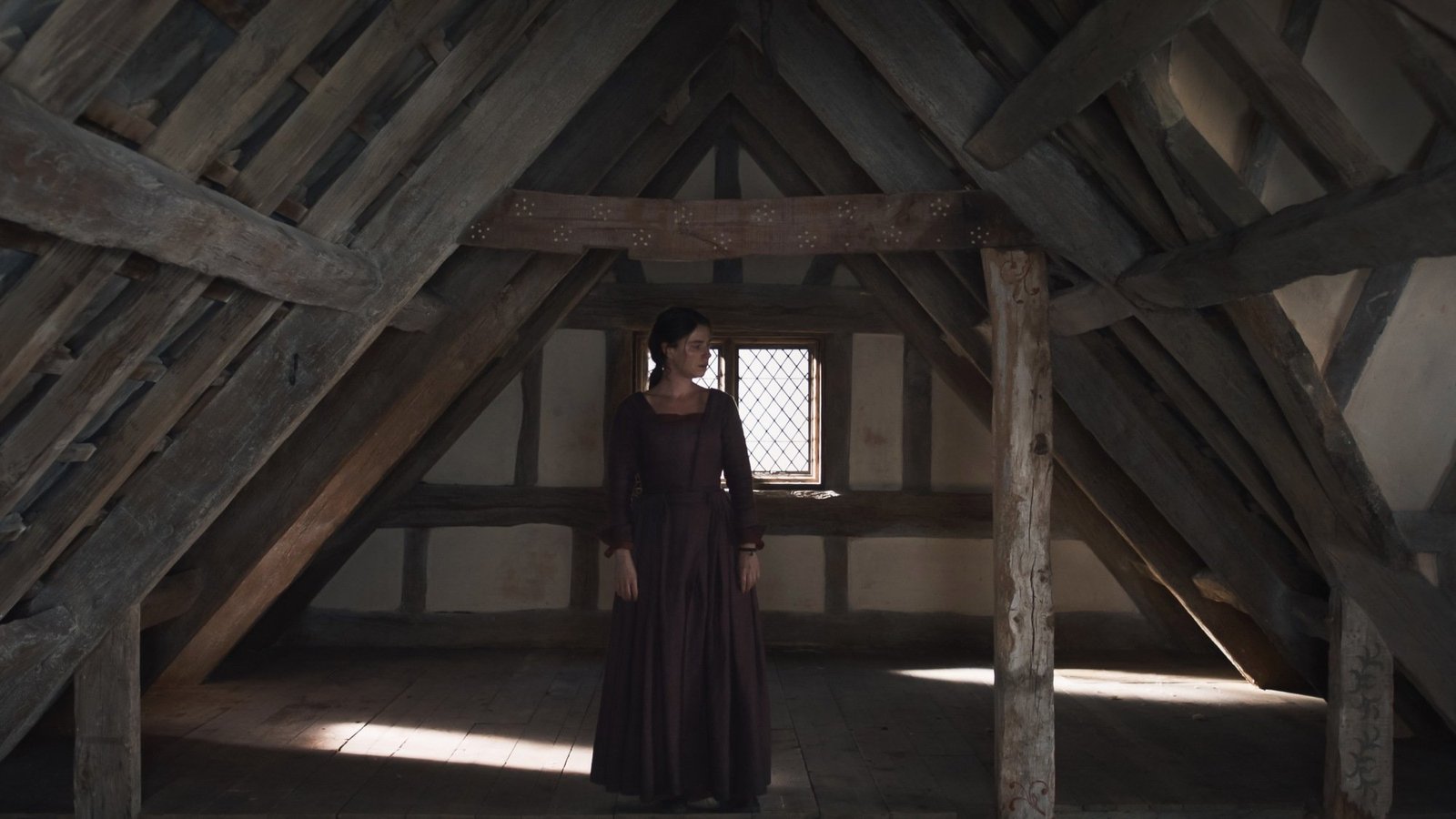
Hamnet focuses on the story of Shakespeare's witchy wife, Agnes.
Credit: Agata Grzybowska/Focus Features
Rather than an earnest recreation of the real-life marriage of William Shakespeare and Anne "Agnes" Hathaway, Hamnet follows O'Farrell's interpretation, which imagines Agnes (Buckley) as a woman in touch with the woods and prone to premonitions of the future.
In the film, Agnes scoffs at gossip that she is a witch. But her woodsy appeal — which includes wearing brash red robes and having a pet hawk — attracts the passionate and bookish son of a local glove-maker. Playing Will and Agnes from their youth into adulthood, Mescal and Buckley easily capture the lusty impulsiveness of young love. Their arms entangle with a violent intensity as they claw private moments from the mundane routines demanded of their families.
Unlike in his yet-to-be-written comedies, marriage is not a happily-ever-after for the pair — as tragedy will follow. Still, marriage is a newfound freedom as they redefine what their married life looks like. For the Shakespeares, that means Will going off to London to write plays and express his soul in tales of star-crossed lovers and fortune-telling witches. For Agnes, that means raising their three children: Susanna and twins Judith and Hamnet. But a vision of her own deathbed makes Agnes certain that one of her children will die before her.
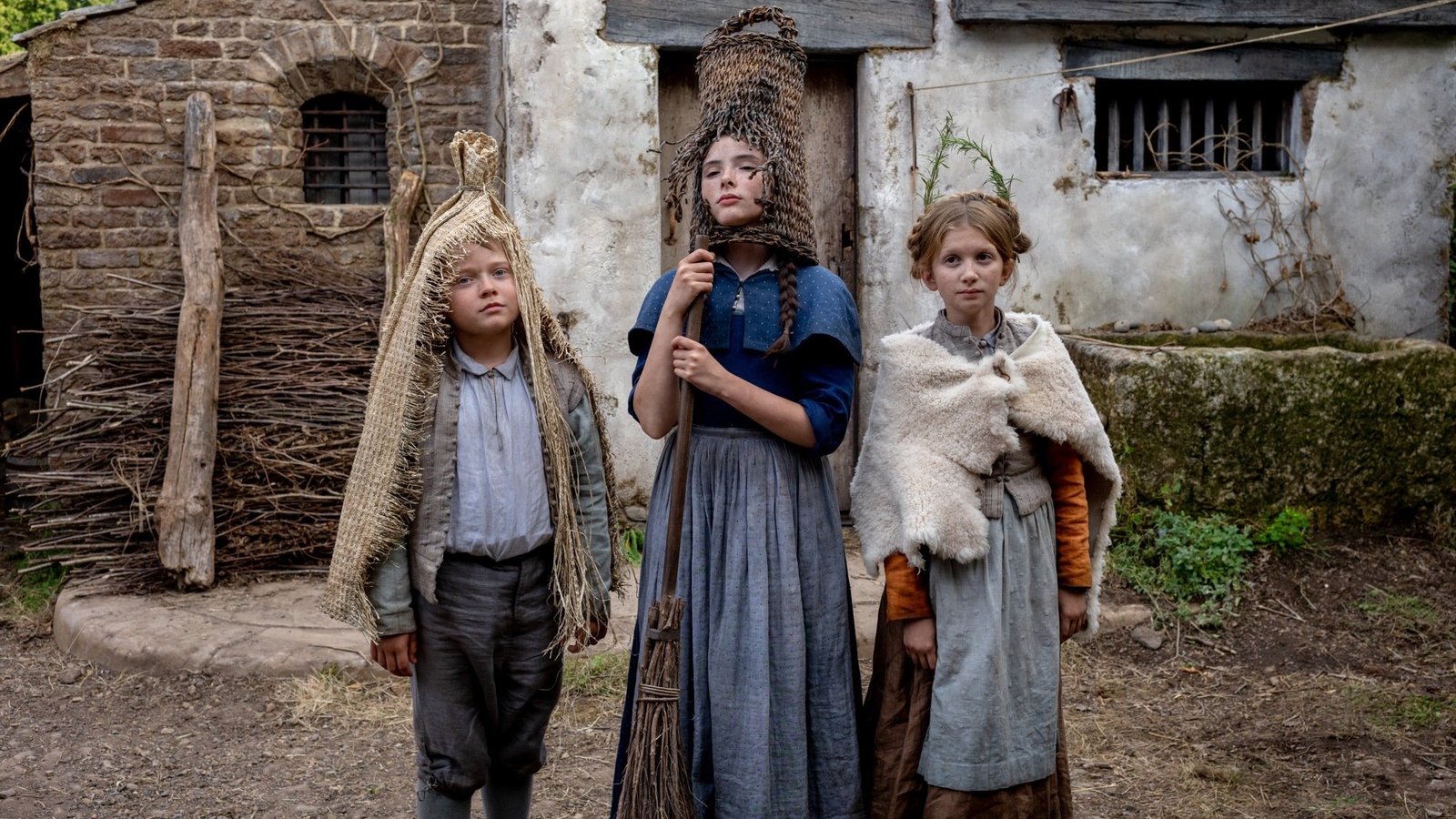
Jacobi Jupe is a rare find as Hamnet.
Credit: Agata Grzybowska/Focus Features
Whether you know the history of Shakespeare's home life, are a fan of O'Farrell's novel, or can just read the room, it's clear early on that Agnes is off with her expectation that the child to die will be her youngest, Judith. This gives an enhanced tension to every moment that she experiences with her bright, adventurous, and caring boy, Hamnet, because we know their time together is short, and she has no clue.
Such a setup would be ripe for agony regardless. But young Jacobi Jupe is stupendous as the 11-year-old Hamnet. Under Zhao's direction, he avoids the pitfalls all too common to child actors in family dramas. He is neither precocious nor ethereal. He galumphs about with his sisters, chuckling in play, swapping clothes for a child-like prank in which the twins trade identities. Before his mother, he dreams of being on the stage, where he gets to sword fight to the cheers of an audience. Jupe frolics with a mix of clumsiness and earnestness that reads simply as authenticity. So when the plague hits the Shakespeare home, and Judith specifically, it's natural that this sweet boy would curl into his twin sister's cot to comfort her.
When Hamnet speaks in a whisper of an ominous "him" that's watching the twins, things get eerie — suggesting he has the same gift for premonition as his mum. But even here, Jupe avoids cliché, in this case that of the haunted house child, wide-eyed in terror. Instead, he is a boy who is scared, but accustomed to playing the hero, and so soldiers on to help his sister with one more switcheroo. And because he feels so real, the pain of his end will take your breath away.
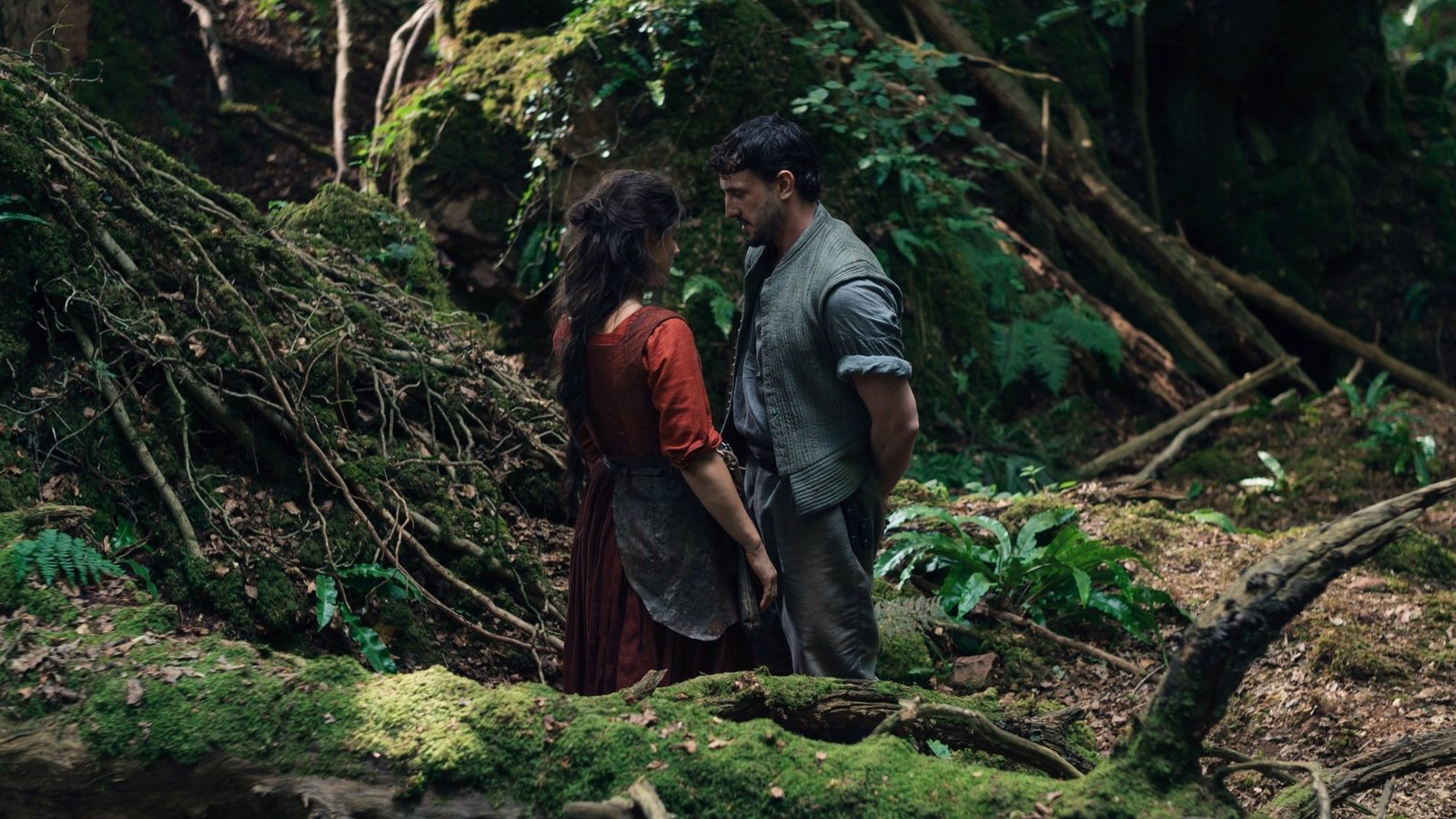
Jessie Buckley and Paul Mescal are riveting in Hamnet.
Credit: Agata Grzybowska/Focus Features
In early scenes of courting, they sizzle, each utilizing their well-reputed onscreen intensity. As the Shakespeare marriage gets complicated by distance and grief, they become explosions, destined to collide. But beautiful work is done in scenes without each other. Buckley, who is unquestionably the lead in the film, harnesses the focus seen in Wild Rose and the ferality of Men for a distinct portrait of grief.
Her rage and resentment are both irrational and understandable. While she is in the home where her boy was lost, her husband is off in London. She can't see that he doesn't escape the loss of Hamnet, but is, in fact, consumed by it. Hamlet begins to take shape as Will's means of making sense of his own guilt and mourning.
The "to be or not to be" speech becomes Mescal's greatest challenge to date. Not only because it's the iconic speech by which the greats are judged, but also because he's not playing Hamlet within it, but the man who wrote that speech to make sense of his own helplessness in the face of mortality. It's a layered and profound moment of pain and pondering, unfurling a labyrinth of dark feelings and darker thoughts. And yet, it's not even Mescal's best scene.
That comes before Will knows Hamnet is dead. Rushing home because he's heard his little Judith is at death's door, Will barrels into the family home to see the girl alive and well. They hug, and he bursts with smiles and relief. But then he sees the little form covered in a white sheet, posed before the fire.
Credit: Agata Grzybowska/Focus Features
"Where is he?" Will says, and in that simple question, Mescal channels a mix of dread, hope, and fear that could bring down the Globe theatre. It's not booming. That's not Zhao's way. It's delivered strong but raw, quavering. It is what pain sounds like when stripped of Hollywood shine. It's too human for an Oscar reel. It's too heartbreaking.
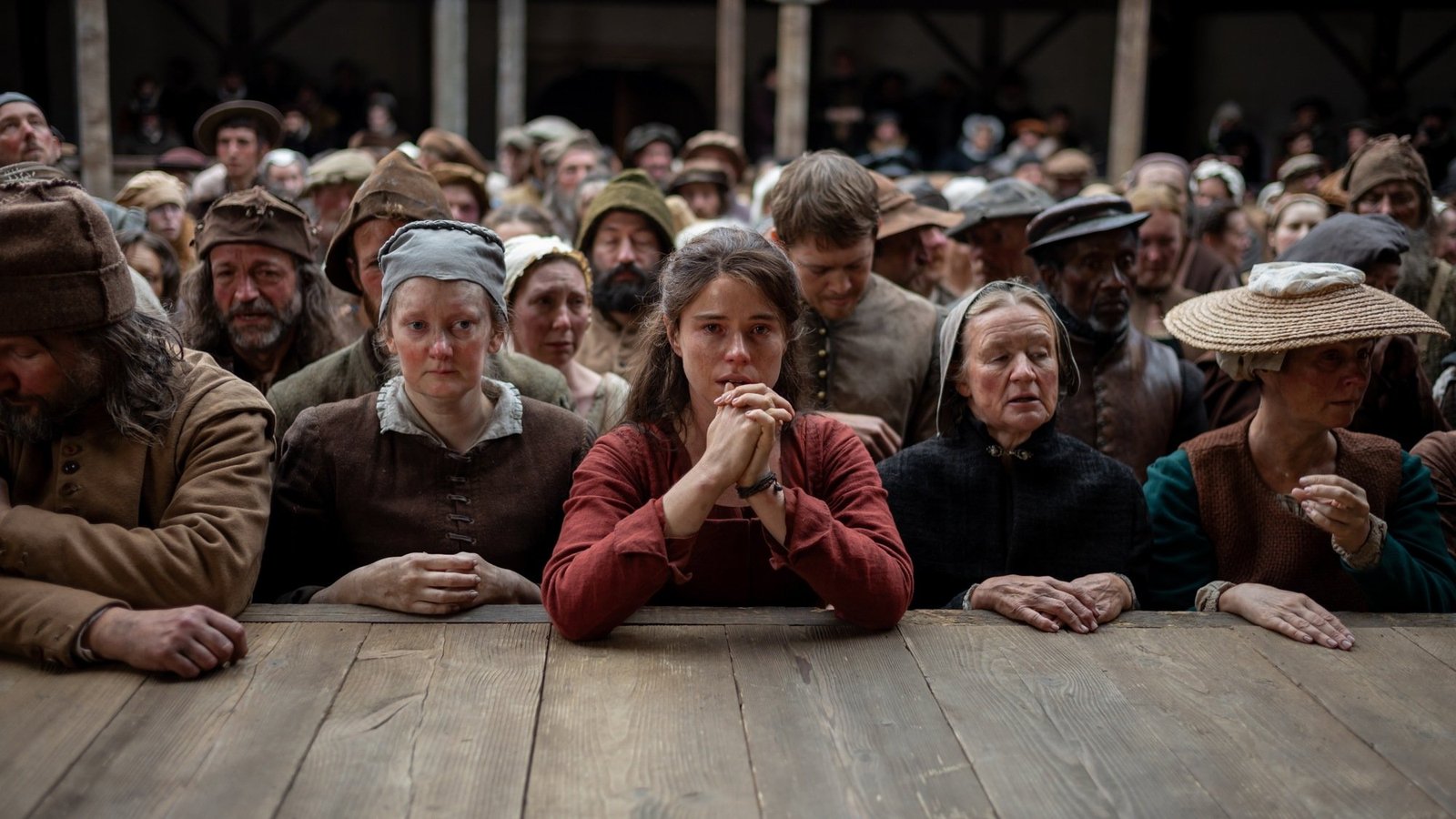
And all of this leads to a climax that takes Agnes and Will's pain to the stage, that of the Globe, to be specific. There Hamnet becomes Hamlet, in a prolonged and nerve-shredding sequence that is fueled by the couple's loss and their divide. No matter how many times you've seen Hamlet, this section hits different because it becomes about the pain that inspired the Dane.
Props to Noah Jupe, who plays the onstage Hamlet, simultaneously channeling an actor striving to impress an audience and the dreamy wish of a mourning mother all at once. In a shrewd move from Zhao, she cast the older brother to play Hamlet to the younger's Hamnet, and the vague familial appearance makes this climax all the more haunting. Noah offers a pitch-perfect echo of his brother Jacobi’s performance with flourishes of maturity and theater-worthy showmanship.
Still, I have one qualm with Hamnet.
Credit: Agata Grzybowska/Focus Features
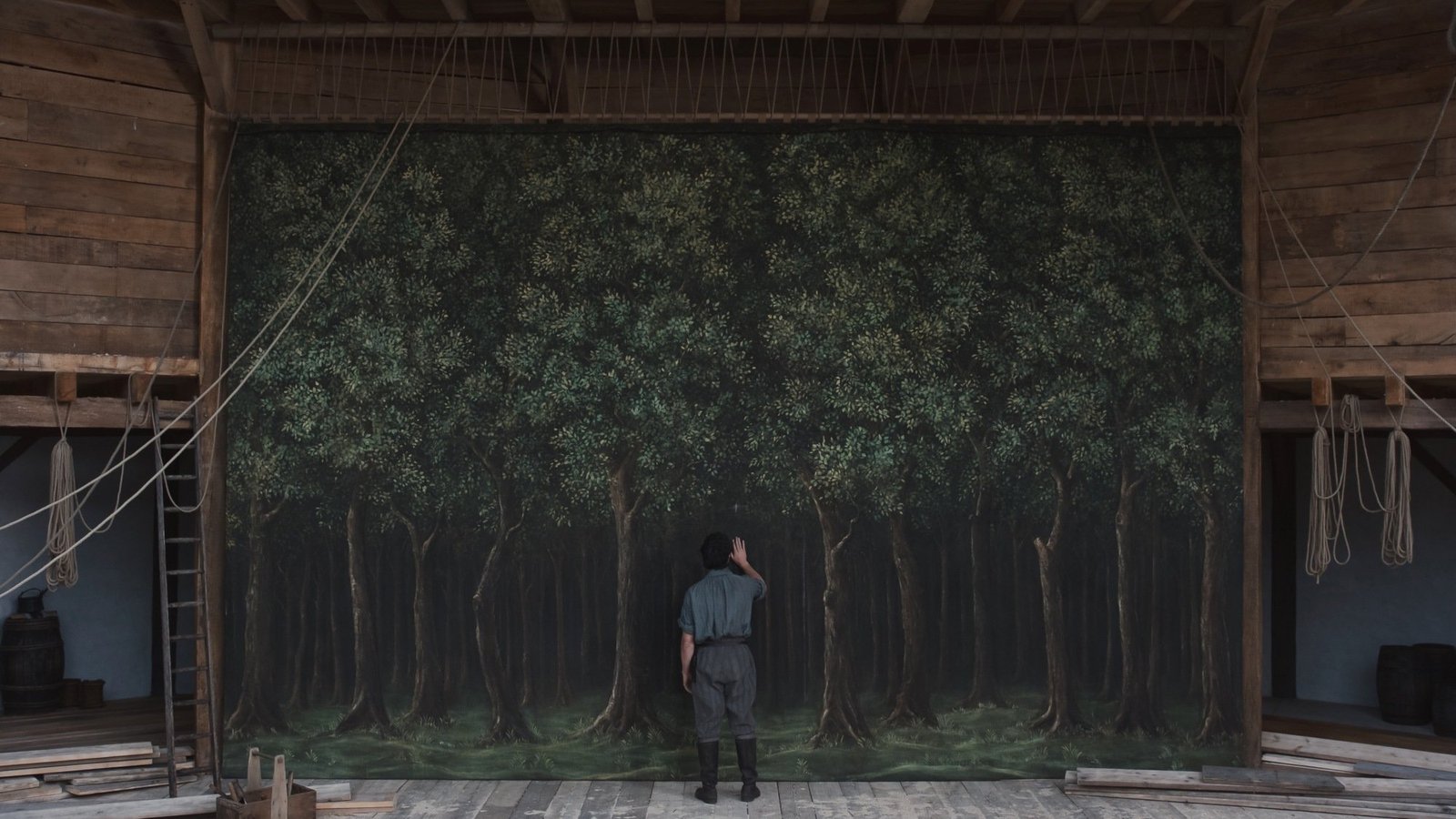
While I can see Zhao's vision and admire her restraint, I must confess I wished for a bit more cinema. I'm not asking for the emoting common in biopics aiming for Oscar glory — which this film is not strictly, on either point. Instead, I wish Zhao had embraced the visual storytelling of Agnes' premonitions as she did with the earthiness of Will's environment.
As Agnes' visions are not just key to the plot but also to the core to her motivations, I wish Zhao had let us see them with her. Hamnet is rooted in Agnes' perspective, yet the screenplay by Zhao and novelist O'Farrell only has dialogue describing these visions of a deathbed with two guests, a landscape of trees, and a dark, infinite cave. By not using this visual medium to show us what Agnes sees, the filmmakers keep Agnes a bit at a distance.
By contrast, Will's view of things gets a visual component through the climactic production of Hamlet. So, in a way, we are given more access to his inner world than Agnes'. And while the film is moving, I sometimes felt like I was watching Agnes' experience instead of feeling it with her — like I was on the outside looking in. Where with Mescal's Will, the play is the thing…that shows the heartache of the scribe.
Still, Hamnet is a bold rebellion, and I respect that. Not only does Zhao reject the temptations of glossy Hollywood biopics, but also the regal romance or cerebral theatricality of a barrage of Oscar-adored Shakespeare adaptations, from a handful of intense Hamlets to The Tragedy of Macbeth to the winsome Shakespeare in Love. Her Shakespeare and company are more feral, bringing this historic tragedy fresh blood and true grit.
For these big swings, Hamnet could be an unconventional but strong Oscar contender. But whether you're invested in awards season or just seeking a powerful drama from actors at the top of their form, be sure to bring tissues. Hamnet could leave you tear-soaked and in tatters.
Hamnet was reviewed out of its premiere at the Toronto International Film Festival. The film will open in theaters Dec.12.


Today's NYT Strands hints are easy if you're rowdy.
Strands, the New York Times' elevated word-search game, requires the player to perform a twist on the classic word search. Words can be made from linked letters — up, down, left, right, or diagonal, but words can also change direction, resulting in quirky shapes and patterns. Every single letter in the grid will be part of an answer. There's always a theme linking every solution, along with the "spangram," a special, word or phrase that sums up that day's theme, and spans the entire grid horizontally or vertically.
By providing an opaque hint and not providing the word list, Strands creates a brain-teasing game that takes a little longer to play than its other games, like Wordle and Connections.
If you're feeling stuck or just don't have 10 or more minutes to figure out today's puzzle, we've got all the NYT Strands hints for today's puzzle you need to progress at your preferred pace.
NYT Strands hint for today’s theme: Hullabaloo
The words are related to sound.
Today’s NYT Strands theme plainly explained
These words describe ruckus.
NYT Strands spangram hint: Is it vertical or horizontal?
Today's NYT Strands spangram is horizontal.
NYT Strands spangram answer today
Today's spangram is Lets Get Loud.
Mashable 101 Fan Fave: Nominate your favorite creators today
NYT Strands word list for April 24
-
Shout
-
Holler
-
Clamor
-
Lets Get Loud
-
Bellow
-
Whoop
-
Caterwaul
Looking for other daily online games? Mashable's Games page has more hints, and if you're looking for more puzzles, Mashable's got games now!
Check out our games hub for Mahjong, Sudoku, free crossword, and more.
Not the day you're after? Here's the solution to yesterday's Strands.

Today's Wordle answer should be easy to solve if you love a good drink.
If you just want to be told today's word, you can jump to the bottom of this article for today's Wordle solution revealed. But if you'd rather solve it yourself, keep reading for some clues, tips, and strategies to assist you.
Where did Wordle come from?
Originally created by engineer Josh Wardle as a gift for his partner, Wordle rapidly spread to become an international phenomenon, with thousands of people around the globe playing every day. Alternate Wordle versions created by fans also sprang up, including battle royale Squabble, music identification game Heardle, and variations like Dordle and Quordle that make you guess multiple words at once.
Wordle eventually became so popular that it was purchased by the New York Times, and TikTok creators even livestream themselves playing.
What's the best Wordle starting word?
The best Wordle starting word is the one that speaks to you. But if you prefer to be strategic in your approach, we have a few ideas to help you pick a word that might help you find the solution faster. One tip is to select a word that includes at least two different vowels, plus some common consonants like S, T, R, or N.
What happened to the Wordle archive?
The entire archive of past Wordle puzzles was originally available for anyone to enjoy whenever they felt like it, but it was later taken down, with the website's creator stating it was done at the request of the New York Times. However, the New York Times then rolled out its own Wordle Archive, available only to NYT Games subscribers.
Is Wordle getting harder?
It might feel like Wordle is getting harder, but it actually isn't any more difficult than when it first began. You can turn on Wordle's Hard Mode if you're after more of a challenge, though.
Here's a subtle hint for today's Wordle answer:
Intoxicated.
Does today's Wordle answer have a double letter?
There are no recurring letters.
Mashable 101 Fan Fave: Nominate your favorite creators today
Today's Wordle is a 5-letter word that starts with…
Today's Wordle starts with the letter D.
The Wordle answer today is…
Get your last guesses in now, because it's your final chance to solve today's Wordle before we reveal the solution.
Drumroll please!
The solution to today's Wordle is…
DRUNK
Don't feel down if you didn't manage to guess it this time. There will be a new Wordle for you to stretch your brain with tomorrow, and we'll be back again to guide you with more helpful hints. Are you also playing NYT Strands? See hints and answers for today's Strands.
Reporting by Chance Townsend, Caitlin Welsh, Sam Haysom, Amanda Yeo, Shannon Connellan, Cecily Mauran, Mike Pearl, and Adam Rosenberg contributed to this article.
If you're looking for more puzzles, Mashable's got games now! Check out our games hub for Mahjong, Sudoku, free crossword, and more.
Not the day you're after? Here's the solution to yesterday's Wordle.

The Federal Communications Commission is using the presence of "controversial gender identity issues" in children's television programming as a pretense for questioning how TV ratings are developed and enforced, according to a notice published Wednesday by the federal agency.
The notice generally assesses TV ratings, but specifically points out that these industry guidelines have rated shows featuring "transgender and gender non-binary programming" as appropriate for children. It argues that parents aren't provided this information, "thereby undermining the ability of parents to make informed choices for their families."
In the document, the FCC poses a series of open-ended questions about TV ratings development, including whether the board responsible for the guidelines is "sufficiently balanced" with viewpoints outside of the entertainment industry and if faith-based organizations should be represented in the body.
"What more could the board do to include family-oriented perspectives — which are not well represented in the media industry — in its ratings process?" the notice asks.
FCC Chairman Brendan Carr announced the public notice on X, explaining that "parents have raised concerns with the industry's approach." He added that these parents believe "New York & Hollywood programmers" promote objectionable content in kids programming without disclosing that to parents. Carr didn't mention gender identity in his X post.
This Tweet is currently unavailable. It might be loading or has been removed.
TV parents guidelines can include both a rating as well as descriptors for content that includes crude language, sexual situations, and violence.
LGBTQ+ advocates criticized the public notice, arguing that it amounted to discrimination and censorship.
"Trump's FCC is trying to turn transgender people into a warning label," Tyler Hack, executive director of the transgender rights advocacy group Christopher Street Project, said in a statement. "It is dehumanizing, and it is part of a broader political strategy to stigmatize LGBTQ+ people in every corner of public life."
Sarah Kate Ellis, president and CEO of GLAAD, described the notice as government overreach.
"Media companies must be allowed to create and broadcast stories that reflect one-quarter of their audience without interference from a government agency with its own anti-transgender political agenda," Ellis said in a statement.
This isn't the first time Carr has been accused of censorship. Carr has claimed broadcasters air "hoaxes" and "news distortions" that also happen to be unfavorable to President Trump. Carr has suggested the licenses of such broadcasters won't be renewed.
In March, dozens of free speech experts argued in an open letter to Carr that his threats against broadcasters are "unlawful jawboning" and his vague characterization of "fake news" violates the First Amendment. The authors called on Carr to "withdraw" his threats.

Which New Music Release Is Your Favorite This Week? Vote!
Celeb-Loved Juicy Couture T-Shirts Are On Sale for $8 Right Now (If You Hurry)
Head Back to Hawkins With New ‘Stranger Things: Tales From ’85’ Soundtrack

SEND IN THE TROOPS! At Least 5 Dead, 10 Wounded So Far in Chicago Weekend Shootings
How I Paid Off My Mortgage 10 Years Early On A Teacher’s Salary

Black Lives Matter Activist in Boston Pleads Guilty to Federal Fraud Charges – Scammed Donors to Fund Her Lifestyle
-
 Politics1 year ago
SEND IN THE TROOPS! At Least 5 Dead, 10 Wounded So Far in Chicago Weekend Shootings
-
Business12 months ago
How I Paid Off My Mortgage 10 Years Early On A Teacher’s Salary
-
 Politics12 months ago
Black Lives Matter Activist in Boston Pleads Guilty to Federal Fraud Charges – Scammed Donors to Fund Her Lifestyle
-

 Tech1 year ago
Get a lifetime subscription to the “ChatGPT for investors” for under $60
-

 Tech12 months ago
Review: The Dreame H15 Pro CarpetFlex is the first wet/dry vacuum I liked
-
Business1 year ago
25 Low-Effort Side Hustles You Can Start This Weekend
-
 Tech1 year ago
How much does the Roborock Saros Z70 cost? And does it ever go on sale?
-
Business1 year ago
9 Ways to Command a Six-Figure Salary Without a Bachelor’s