
Tech
The DJI Power 1000 V2 is a near-perfect portable power station for content creators

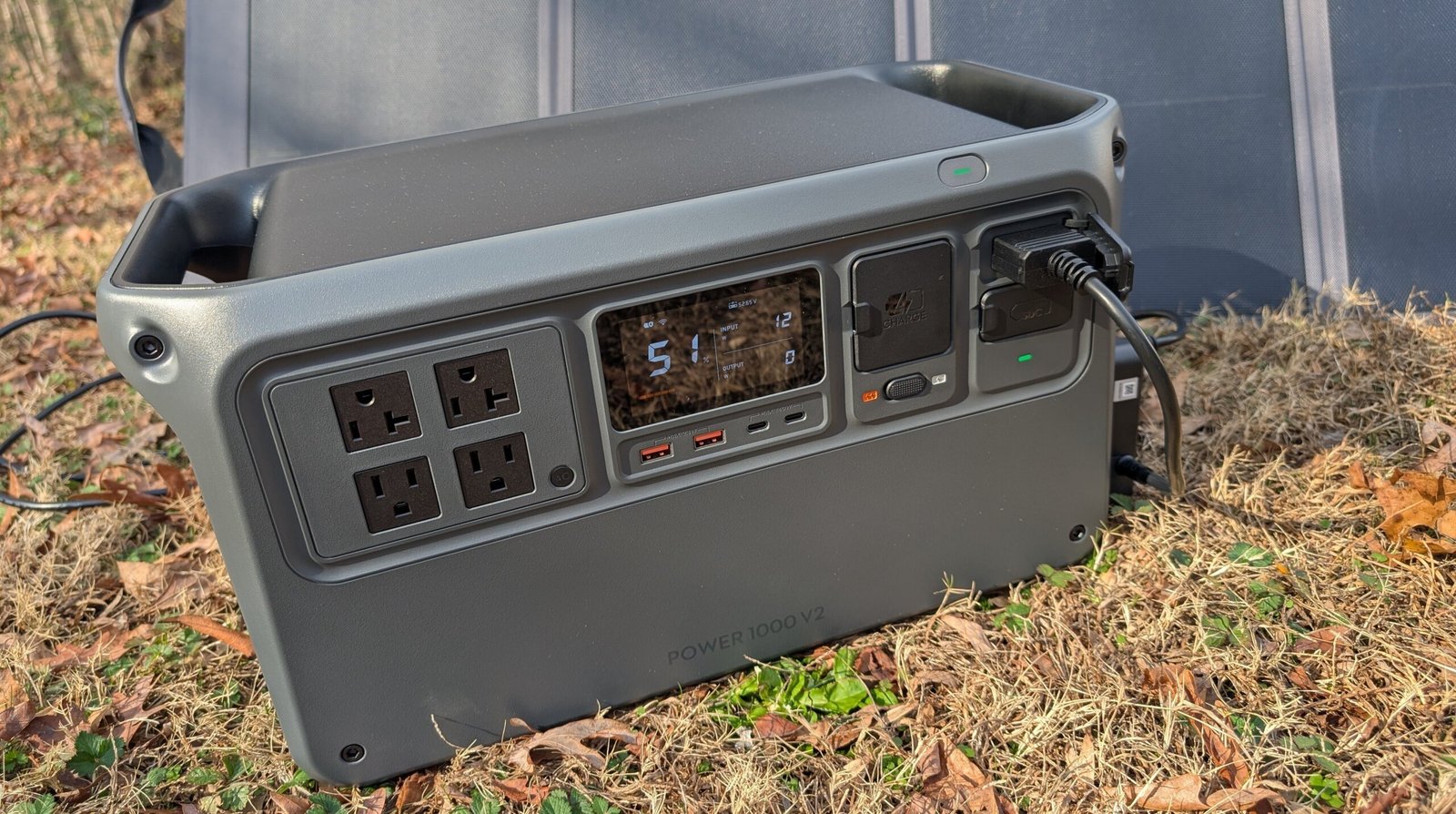
What started as the drone company is now so much more. In addition to DJI drones, it appears as if every content creator is using the DJI Mic Mini (and rightfully so), and the brand’s lineup of handheld cameras, like the DJI Osmo Pocket 3, sure earn their spot as some of the best options on the market. But in recent years, DJI has added another major category to the product lineup that’s also essential for creators — portable power.
The world of portable power stations is expanding the day, proving themselves awesome during power outages, camping, job sites, and content creation adventures. The market is dominated by big-name players like Bluetti, Jackery, Anker, and EcoFlow.
But DJI is quietly in the background, pumping out some of the best options that cater specifically to content creators. The brand has the beefy DJI Power 2000 and the mini DJI Power 500. But the DJI Power 1000 falls nicely in the middle of these two, offering 1,024Wh of power, and the brand just revamped the portable power station to give us the DJI Power 1000 V2. It’s an upgraded model compared to the first generation and comes with some solid improvements.
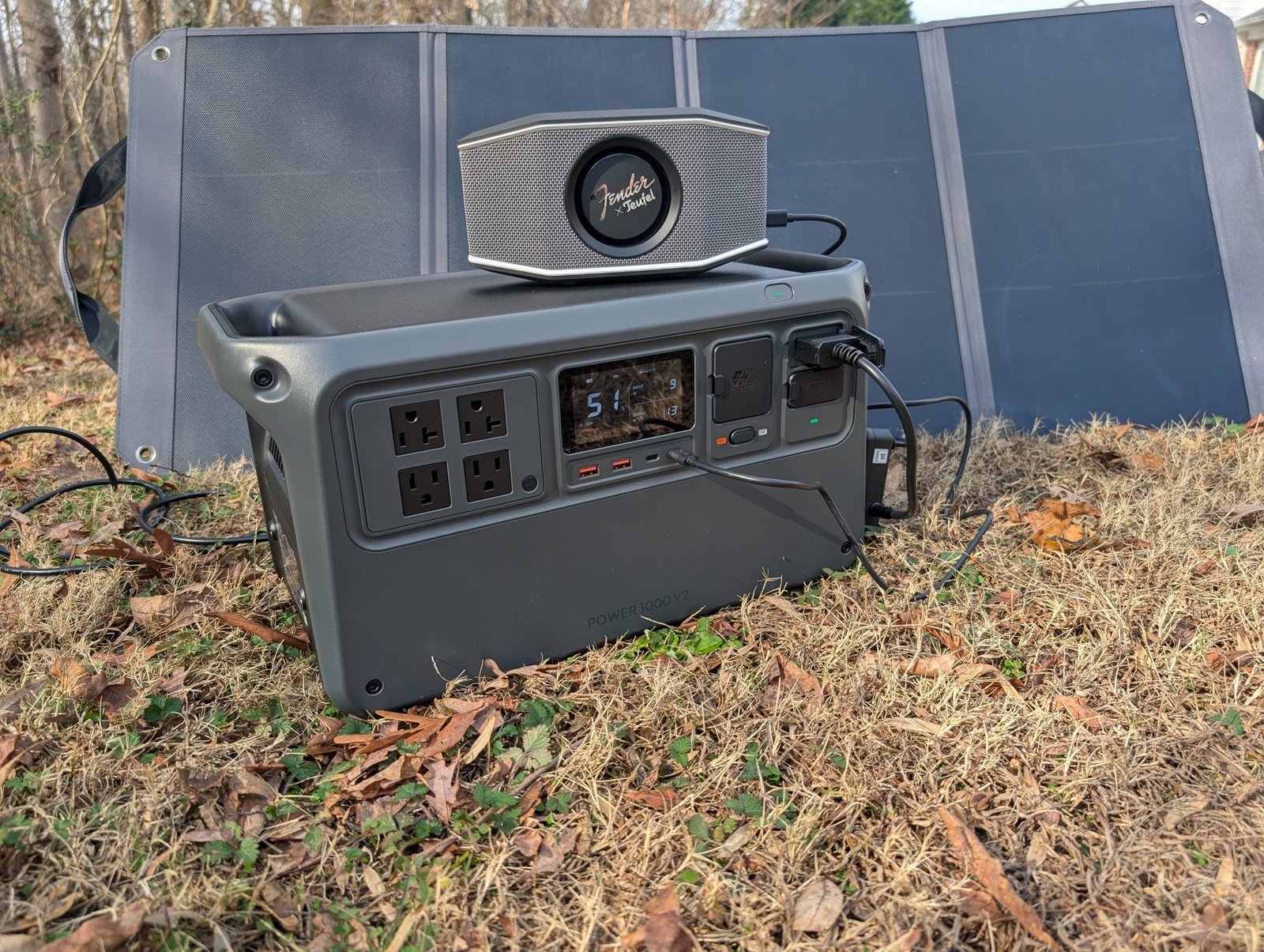
Credit: Lauren Allain / Mashable
After testing the upgraded DJI Power 1000 V2, I’m convinced this is a great model for content creators, those who prioritize a super-quiet power station, or anyone looking for exceptional value in portable power.
What I love about the DJI Power 1000 V2
Straight out of the box, the DJI Power 1000 V2 has a sleek and refined design. It’s also fairly compact for a power station in the 1,000Wh category. It weighs about 31 pounds and has ergonomic handles on both sides. While I wouldn’t want to haul this around all day, I felt comfortable unboxing it, carrying it around the house, taking it into the yard, and it was no issue to lift it into my car. The weight of a portable power station is incredibly relevant since you might be carrying it up a set of stairs during a power outage, moving it around the campsite, or pulling it around during a content creation session.
Another major benefit that I love is the near-silent operation of the DJI Power 1000 V2, which DJI says is as quiet as 26 decibels. That’s going to be important for content creators who are filming near the power station and don’t want a loud fan sound in the background. In non-creator scenarios, going with an ultra-quiet portable power station means it’ll be easier to have on while sleeping should you be charging your phone overnight, operating a CPAP, or using it in the kids’ bedroom during a power outage.
It also shines when it comes time to recharge. It takes just 56 minutes to go from dead to 100 percent battery power when recharging with standard wall power. A 37-minute recharge will get the power station back to 80 percent capacity.
Here’s a full rundown of highlight specs on the DJI Power 1000 V2:
Specs
-
Capacity: 1,024Wh
-
Continuous output: 2600W
-
Weight: approx. 31 pounds
-
Dimensions: 17.6 in. L × 8.9 in. W × 9 in. H
-
Power options: 4 AC, 2 USB-C (140W), 2 USB-A, 1 SDC, 1 SDC Lite
-
Recharging options: Grid power, solar, car
-
Battery type: LiFePO4 (lithium iron phosphate)
-
Life cycles: 80 percent capacity after 4,000 cycles
-
Operating and storage temperature: 14 degrees to 113 degrees Fahrenheit
-
Recharging temperature: 32 degrees to 113 degrees Fahrenheit
How does the DJI Power 1000 V2 compare to the original DJI Power 1000?
Since this is the second generation of the DJI Power 1000, it’s worth comparing the new V2 to the original. DJI added some small but significant upgrades to the new V2 model that make it a lot more appealing compared to the original. After testing and comparing the specs, I can’t see a reason why anyone would prefer the original Power 1000 to the new V2, unless the original was way cheaper. Here are the improvements DJI made with this second version and why I’d go with the Power 1000 V2.
More ports
One of the most obvious upgrades from the original to the Power 1000 V2 is the addition of two AC ports for a total of four. That’s much more in line with the industry standard for a 1,000Wh portable power station. Two feels very skimpy while four feels acceptable. But it’s worth noting that other brands offer more ports. For example, one of my favorite portable power stations, the Anker Solix C1000 Gen 2, has five AC ports.
The dual USB-C and dual USB-A ports on the DJI Power 1000 V2 are identical to those found on the original Power 1000, as are the two SDC ports.
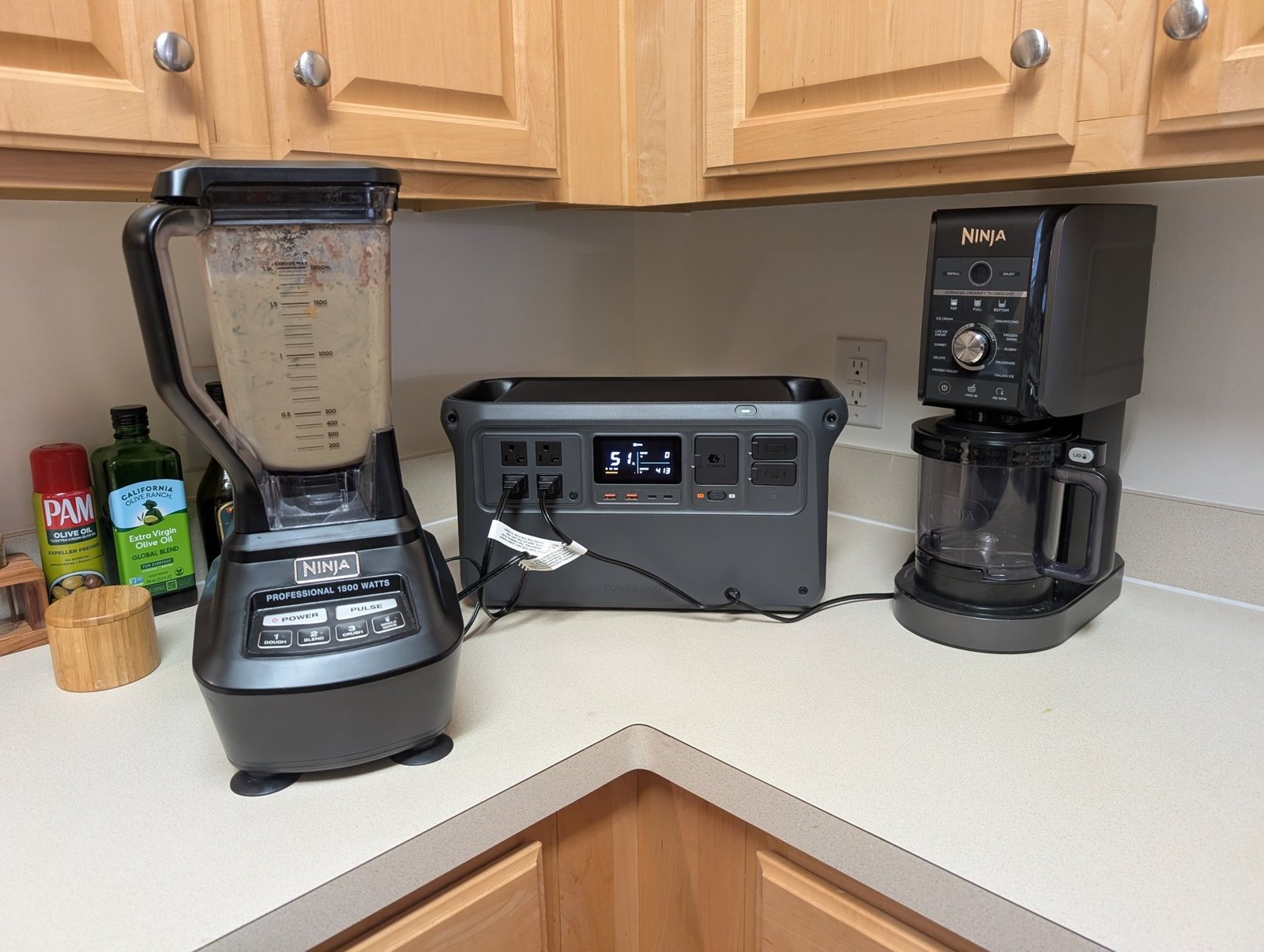
Credit: Lauren Allain / Mashable
Higher altitude
Specific to content creators, overlanders, or adventurous campers, the DJI Power 1000 V2 works at higher altitudes. The original topped out at 3,000 meters, but the new V2 can still operate at heights of up to 5,000 meters. That elevation is damn impressive when we consider the Matterhorn tops out at 4,478 meters.
Better stable output
DJI amped up the continuous output with the Power 1000 V2. The original topped out at 2,200W, but the new V2 packs in 2,600W. DJI’s example of this in real life includes powering up a 2,300W electric heater while also powering a 200W projector and giving 27W to recharge a phone. In total, the DJI Power 1000 V2 has an 18 percent higher continuous output.
Quicker recharging
Another major, but less obvious, upgrade is much quicker recharging on the Power 10000 V2. The older original Power 1000 took about 70 minutes to fully recharge with standard wall power. The new Power 1000 V2 takes just 56 minutes to fully recharge. That’s 20 percent faster, shaving nearly 15 minutes off recharging time. For those in the middle of a content creation session, that could be a major difference.
Major expansion possibility and great accessories
The thoughtfulness of the design on the DJI Power 1000 V2 shines through for both expansion ability and accessories. The Power 1000 V2 can connect to up to five DJI Expansion Battery 2000, each adding 2,048Wh. Take the initial 1,024Wh on the Power 1000 V2 and add five Expansion Battery 2000 to the mix, and you’re in line for a total of 11,264 Wh. Each DJI Expansion Battery 2000 sells for $899.
What I love about portable power stations that have the ability to link up with extra batteries is that you don’t have to commit to a specific power need. Grab the DJI Power 1000 V2 and then see how it goes. Maybe the 1,024Wh is sufficient for you. But if it’s not, it’s super easy to grab an extra battery. This approach can also be beneficial if you’re looking to get portable power but don’t want to dish out the big money for a larger power station right now.
You’re probably wondering how you’d possibly haul around a portable power station with five batteries stacked above it, and that’s where the thoughtful DJI accessories come into play. The DJI Power Expansion Battery 2000 Hand Truck Combo offers a stable way to cart around major amounts of portable power.
Credit: Lauren Allain / Mashable
Credit: Lauren Allain
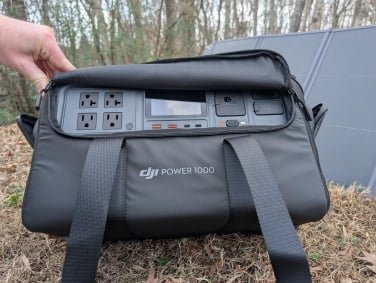
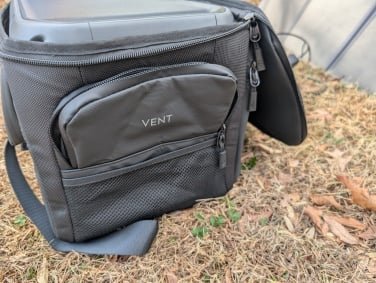
I feel silly saying this, but I adore the DJI Power 1000 Protective Storage Bag. It makes carrying the power station a breeze, and its design allows for full access to all ports without taking it out of the bag. There’s also a zippered area for storing cables.
The benefits of the DJI Power 1000 V2 for DJI drone owners
The two SDC ports on the DJI Power 1000 V2 are unique to DJI portable power stations, and you won’t find them included on power stations from other brands. This is relevant to those with DJI drones because it gives access to super quick recharging of drone batteries.
The award for the fastest DJI drone battery recharge goes to the Inspire 3 TB51 Intelligent Flight Battery, which charges from 10 percent to 95 percent in 28 minutes with the DJI Power 1000 V2. The Air Series 3 Intelligent Flight Battery goes to 95 percent in 30 minutes. The slight hitch here is that you’ll need to purchase the fast-charge cable to get this drone-recharging benefit. However, the good news is that the cable costs about $20.
What I don’t love about the DJI Power 1000 V2
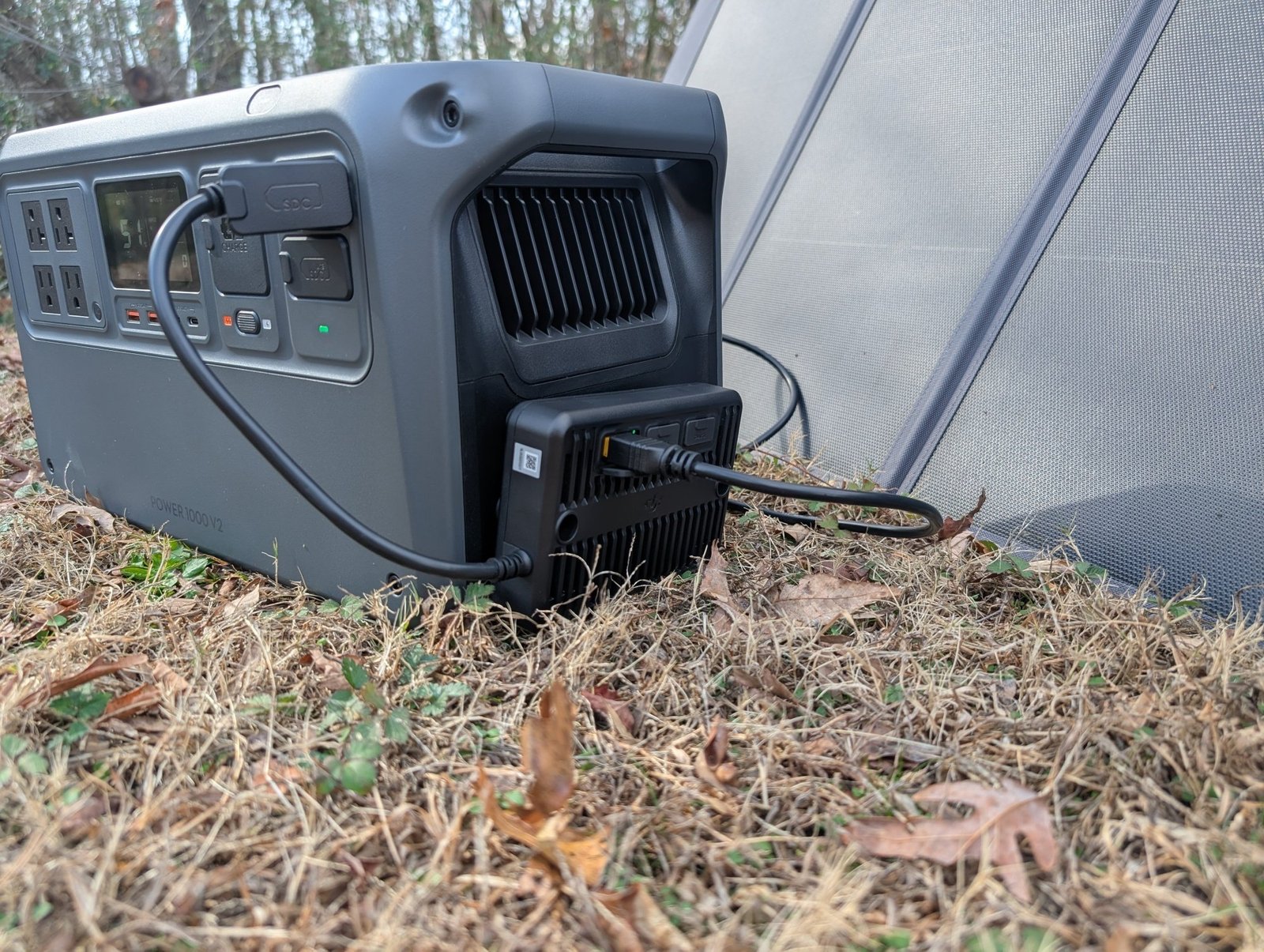
While the SDC ports are great for fast-charging DJI drones, they prove troublesome in other aspects. My main gripe is that, true to other DJI portable power stations, the Power 1000 V2 does not have built-in ports that connect to solar panels. If you want to recharge with solar, you’ll have to purchase the DJI Power Solar Panel Adapter Module, which sells for $59. This is a bit of a letdown considering that every other portable power station I’ve tested has built-in ports that connect to solar panels. If you don’t plan on recharging with solar panels, you can ignore this con.
Credit: Lauren Allain / Mashable
My other disappointment with the DJI Power 1000 V2 is that it doesn’t have an onboard external light. The display is perfect for getting all the stats you need about the station, but I love a power station that has a built-in flashlight. It’s so much nicer to climb stairs while carrying a power station with a light on the station itself. It’s also awesome to use during power outages. This lack of light is not unique to this particular portable power station. Most brands seem to be moving away from including a built-in light, and while I’m sad about it, it’s not like we don’t have other light sources.
Is the DJI Power 1000 V2 worth buying?
At full price, DJI is selling the Power 1000 V2 for $699. That falls into a fairly standard price range for a portable power station in the 1,000Wh category. But given its special attributes for content creators, I think this is a worthy model for creators. Because of its ultra-quiet operation, I also like it for those who don’t want a loud fan or who will be sleeping in the same room as the power station. Aside from those two points, everyone else could benefit from this model since it lands in a nice price range. It’ll be great for camping, road trips, or power outages. I wouldn’t hesitate to choose the DJI Power 1000 V2 if the price is more attractive compared to other models that offer similar stats.

Bad Bunny promised good vibes and a whole lot of dancing during his Super Bowl halftime show, and he didn’t disappoint. But beneath the perreo-ready hits and viral clips was something deeper.
The performance unfolded as a densely layered visual essay, moving from Puerto Rico's sugar cane fields to New York bodegas, from reggaetón history to quiet political protest, and packing decades of memory, migration, and resistance into just 13 minutes of television.
From set pieces referencing the island's ongoing infrastructure collapse following Hurricane Maria to cameos honoring small-business legends and community elders, nearly every frame carried meaning. Some references were immediately legible. Others were designed for the fans who know where to look.
It was a case of storytelling: a reminder that Benito Antonio Martínez Ocasio didn't just bring Puerto Rico to the Super Bowl. He brought its history with him. Here are some of the Easter eggs you may have missed.
Returning to the roots of the sugar cane fields
Before fireworks, choreography, or surprise cameos, Bad Bunny began his Super Bowl halftime show in a quiet, sunlit sugar cane field, worlds away from the stadium spectacle to come.
This Tweet is currently unavailable. It might be loading or has been removed.
Sugar cane fields are deeply woven into Puerto Rico's history, tied to colonial exploitation and the agricultural labor of generations of working-class people. By opening the performance there, Bad Bunny grounded his global moment in the island's past, honoring the people whose work and resilience built Puerto Rico long before it became a cultural export. It was a reminder that everything that followed grew from this soil first.
Bad Bunny's "Ocasio 64" jersey carries history
When Bad Bunny stepped onto the Super Bowl stage in a custom Zara jersey stitched with the name "Ocasio" and the number "64," it immediately sparked speculation. The name referenced his full surname, Martínez Ocasio. The number, however, carried a heavier weight.
On a personal level, "64" honors his late uncle, who once wore the same number as an athlete. But it also echoes the Puerto Rican government’s initial claim of just 64 deaths after Hurricane Maria in 2017 — a figure later revealed to be a devastating undercount.
Falling into YHLQMDLG
Midway through "Party," Bad Bunny plunged through the roof of the casita into a family's blue living room, a moment that felt both unexpected and deeply intentional.
The visual mirrored the aesthetic of his 2020 album YHLQMDLG, whose blue-hued visualizers defined an era fans never got to see live. The pandemic canceled that tour, making the Super Bowl moment a belated love letter to longtime listeners who’ve been riding with him since the beginning.
Toñita's surprise cameo
Among the star-studded spectacle, one of the night's most meaningful appearances belonged to someone far from the pop spotlight: Maria Antonia "Toñita" Cay, the beloved owner of Caribbean Social Club.
A fixture of Puerto Rican life in Williamsburg for decades, Toñita has been name-checked in Bad Bunny's lyrics and embraced by the Nuyorican community. Her presence in the show was about honoring the everyday institutions that keep culture alive.
This Tweet is currently unavailable. It might be loading or has been removed.
Victor Villa and the power of the side hustle
Another blink-and-you'll-miss-it guest was Victor Villa, the founder of Villa's Tacos. You'll see Benito pass a Villa's Tacos truck during "Tití Me Preguntó."
This Tweet is currently unavailable. It might be loading or has been removed.
Villa's journey — from selling tacos in his grandmother's yard to running acclaimed brick-and-mortar locations — mirrors Bad Bunny's own narrative of grassroots success. His cameo not only celebrated immigrant hustle but also spoke to Bad Bunny's larger message of believing in where you come from, a belief he made explicit when he told Super Bowl viewers that he never stopped believing in himself and that others should believe in themselves, too.
Coco frío and island street life
During "Tití Me Preguntó," Bad Bunny moved past dancers gathered around a coco frío cart, a small detail loaded with nostalgia. Fresh coconut water, sold by street vendors across Puerto Rico, is part of daily life on the island. By centering it in a Super Bowl spectacle, Bad Bunny elevated an ordinary ritual into a symbol of home.
"Gasolina" and the lineage of reggaetón
No, your ears did not deceive you. After blending "Yo Perreo Sola" and "Voy a Llevarte Pa’ PR," Bad Bunny pivoted into a snippet of "Gasolina" by Daddy Yankee, a defining anthem of the genre.
The track, inducted into the Library of Congress in 2023, helped globalize reggaetón in the 2000s. Bad Bunny's performance also sampled Tego Calderón's "Pa’ Que Retozen" and Don Omar's "Dale Don Dale," situating himself within a living musical lineage.
Concho the toad makes an appearance
Before launching into "Monaco," the camera cut to an image of Concho, the animated amphibian mascot of Bad Bunny's latest album, Debí Tirar Más Fotos. Modeled after the endangered Puerto Rican crested toad, Concho represents environmental fragility and cultural survival.
This Tweet is currently unavailable. It might be loading or has been removed.
Jíbaros, power lines, and "El Apagón"
Men in straw hats (pavas) and white clothing — jíbaros, Puerto Rico’s traditional mountain farmers — appeared climbing power lines, blending folklore with modern crisis.
Historically associated with rural life and folk music, jíbaros symbolize resilience. Here, their placement on broken infrastructure referenced post-Hurricane Maria privatization, rolling blackouts under LUMA Energy, and the economic displacement explored in the song "El Apagón." It was a visual essay on who gets left behind when "progress" arrives.
Ricky Martin's Spanish-language reclamation
When Ricky Martin joined to perform "Lo Que Pasó a Hawaii," the moment felt both nostalgic and quietly radical. For an artist long associated with English-language crossover hits like "Livin' la Vida Loca" and "She Bangs," returning to a Spanish-language ballad on the Super Bowl stage carried its own symbolism.
The song reflects on migration and loss. Singing entirely in Spanish, sitting in a monobloc chair, marked how far Latin music has pushed the mainstream. What once felt risky now feels inevitable.
The light blue flag of Puerto Rican independence
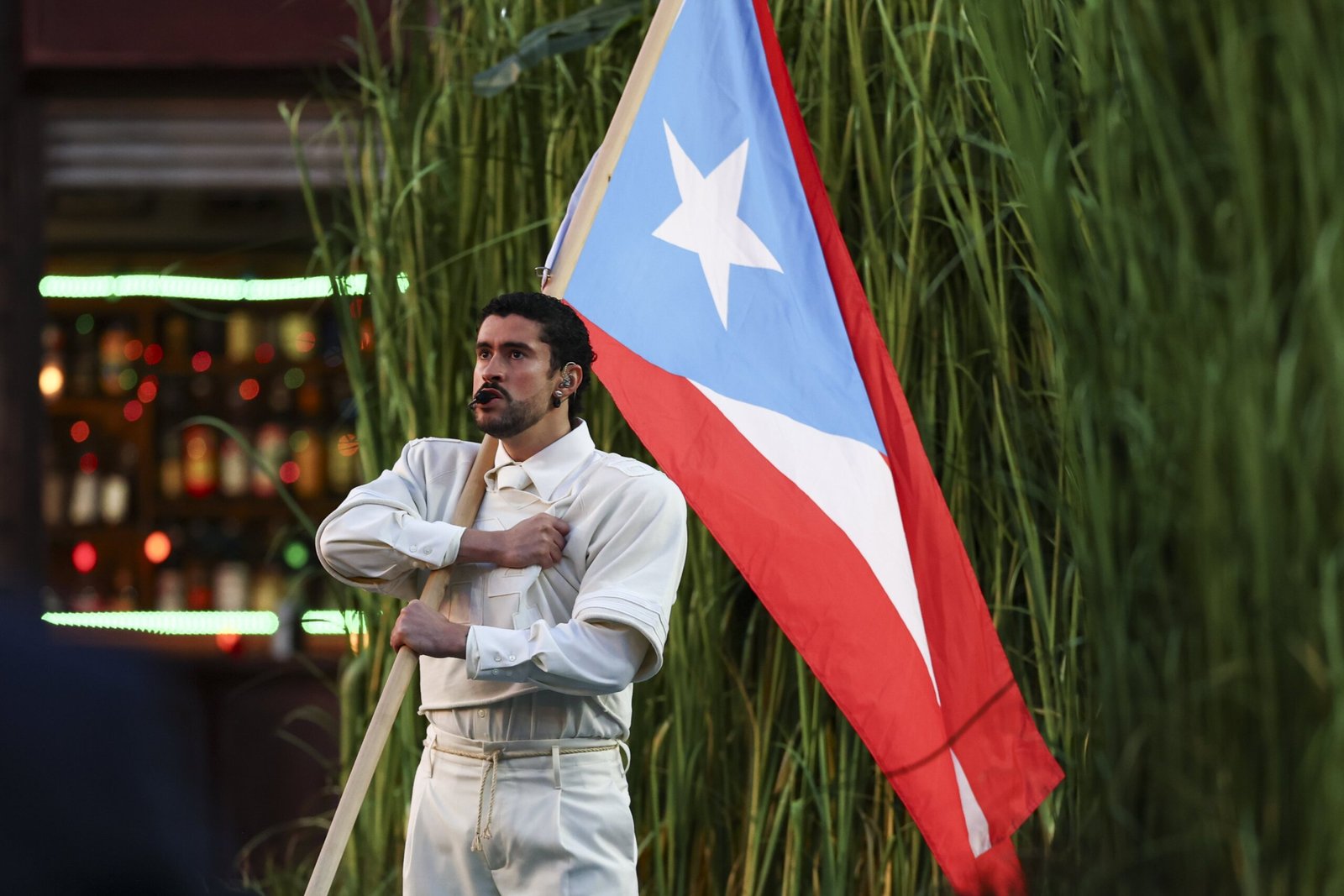
At one point, Bad Bunny held la bandera con azul celeste, the light-blue version of Puerto Rico's flag linked to the independence movement.
Once associated with calls for Puerto Rican sovereignty and traced back to pre-U.S. colonial revolts, the light-blue variant of the Puerto Rican flag has become a symbol of resistance and cultural pride. Historians identify azul celeste as the original shade tied to late-19th-century independence movements, and its use today often signals a deeper conversation about the island's identity.
Bad Bunny previously featured it in "La Mudanza," and bringing it to the Super Bowl transformed a political statement into a global broadcast.
A quiet nod to Haiti's visual history
In one of the show's most subtle visual callbacks, a woman waving Haiti's flag wore a green-and-orange ribbed knit top that closely echoed Jay Maisel's 1973 Haiti series, particularly "Haiti No. 59." The styling — easy to miss amid the spectacle — felt deliberately precise, mirroring the texture, color, and composition of Maisel's iconic image.
This Tweet is currently unavailable. It might be loading or has been removed.
Lady Gaga and the maga flower
Lady Gaga’s baby-blue dress, paired with a red floral brooch resembling Puerto Rico's national maga flower, was more than a fashion moment. Designed by Luar founder Raul Lopez, the look wove national symbolism into couture, reinforcing the night’s emphasis on Puerto Rican pride.
This Tweet is currently unavailable. It might be loading or has been removed.
"La Marqueta" and the roots of diaspora
During "NUEVAYoL," Bad Bunny walked past a New York-style streetscape featuring a storefront labeled "La Marqueta."
The real La Marqueta in East Harlem was once a hub for Latino immigrants, helping shape Spanish Harlem in the mid-20th century. Its inclusion honored the diaspora communities that carried Puerto Rican culture beyond the island — and brought it back, amplified, to the global stage.
"Together We Are America"
Toward the end of the halftime performance, Bad Bunny — notably speaking in English — said, "God Bless America." He then expanded the phrase to encompass all the countries of the Americas, not just the United States, re-framing it as a message of unity and belonging. Holding up a football emblazoned with "Together We Are America," he made the point explicit.
Then, switching back to Spanish, he added: "seguimos aquí" ("we’re still here"), before spiking the ball and launching into "DtMF." The moment crystallized the show's larger thesis: presence as resistance, visibility as power, and community as the foundation of everything.
Dyson Supersonic Nural
(save $150)
Dyson Airwrap i.d.
(save $150)
Valentine's Day is less than a week away, but if you haven't bought a gift just yet, Dyson's giving last-minute shoppers a pretty sweet deal.
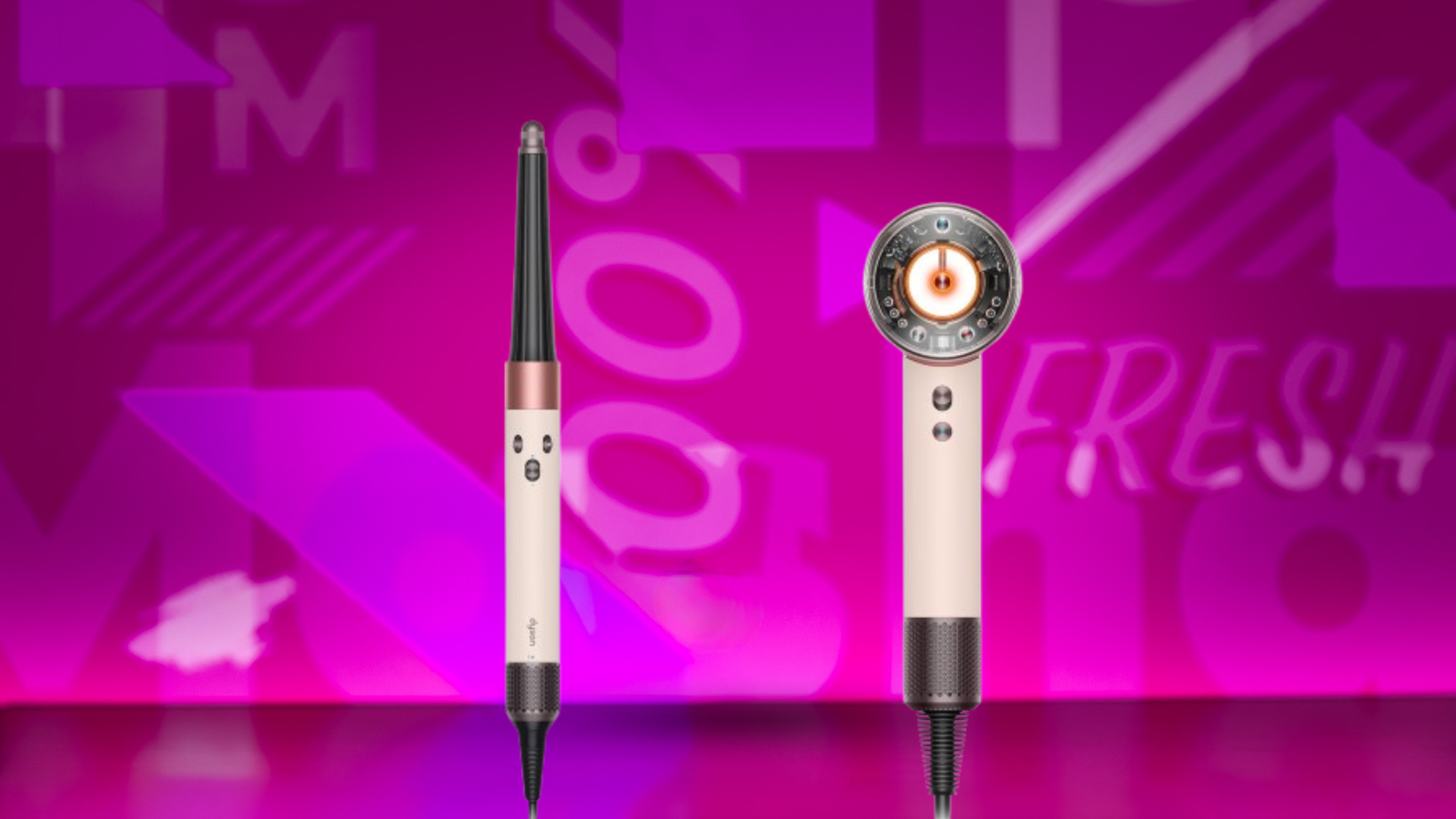
Well, technically two deals. As of Feb. 9, you can grab the Dyson Supersonic Nural hair dryer for $399.99, saving you $150 on the $549.99 list price. The same discount is also available on the Dyson Airwrap i.d. multi-styler, which comes down to $499.99 from its full price of $649.99.
At the time of writing, neither tool is on sale at Amazon, and while the Airwrap i.d. is on sale at Best Buy for the same price, the Supersonic Nural is still at full price. Sephora, on the other hand, has both the Airwrap i.d. and Supersonic Nural on sale, but only in the amber silk colorway, whereas Dyson's site offers more variety.
So which is the best to pick up for your boo (or yourself)? As Mashable's beauty tech expert, I broke it down below.
Dyson Airwrap i.d. deal
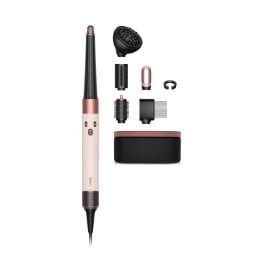
Opens in a new window
Why we like it
I've tested every Supersonic model available, and while I maintain the supremacy Shark FlexStyle in a pure value sense, the Airwrap i.d. is the multi-styler that made me most get Dyson's popularity. Typically, the curling barrels on multi-stylers provide more of a blown out than truly curled look — and if your hair has trouble holding a style, the wave you do get might not last.
The Airwrap i.d. makes this process better by including a conical barrel in the attachments for tighter curls, and automatic temperature cycling — meaning the hair is hit with properly timed hot then cool air with the press of a button — making styling with this tool as mindless as it should be. In addition to the conical curling attachment, you'll get five more attachments (which vary slightly depending on whether you opt for the straight and wavy or curly and coily model).
Dyson Supersonic Nural deal
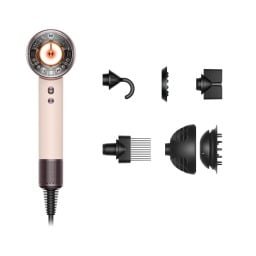
Opens in a new window
Why we like it
This is not the hair dryer for the dupe lover. This is the hair dryer for the person who rarely air drys, and wants one of the fastest and easiest hair dry experiences on the market. It comes with smart attachments that automatically adjust temperature and air speed, a scalp protect mode for closer and more comfortable drying, and automatic pausing. For textured hair folks, the diffuser has a removable center that's especially useful for pixie diffusing and maximizing your volume potential.
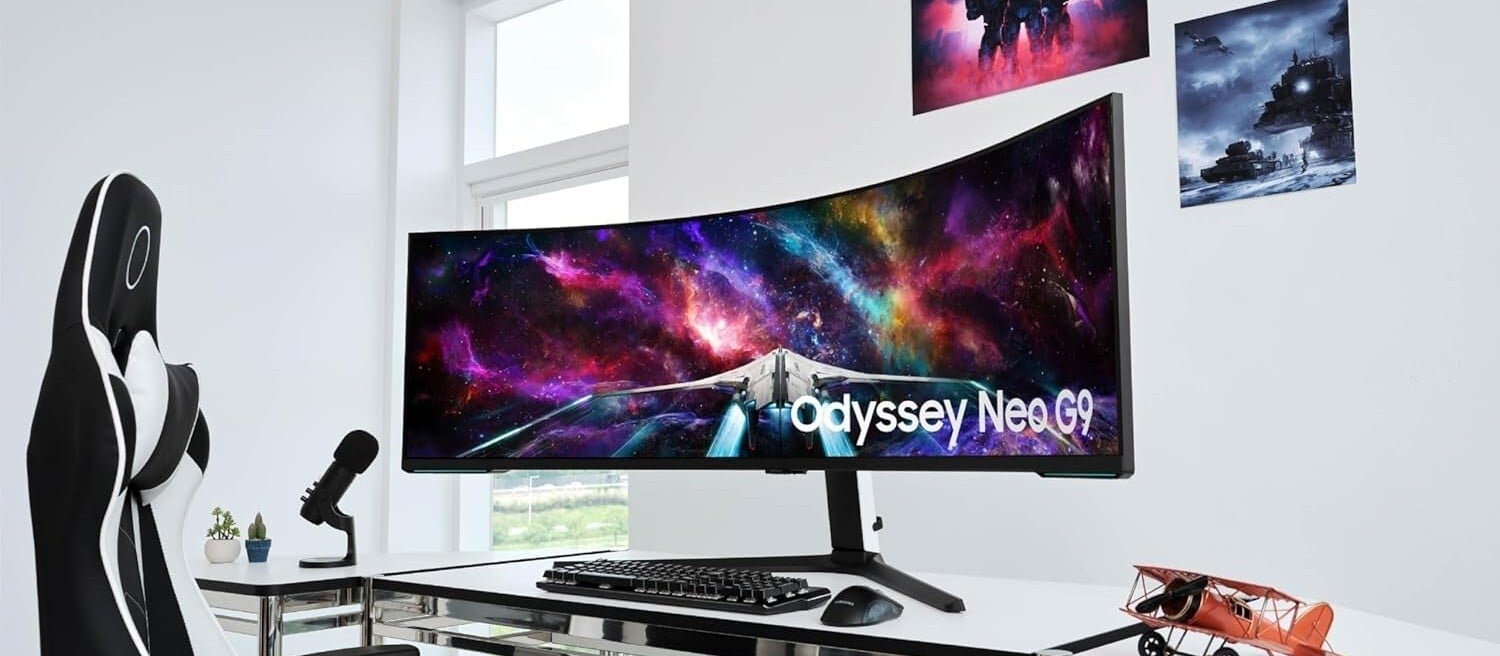
SAVE $800: The 57-inch Samsung Odyssey Neo G9 curved gaming monitor is on sale at Amazon for $1,499.99, down from the normal price of $2,299.99. That's a 35% discount.
Opens in a new window
Sometimes, bigger is better. Think that bag of potato chips from Costco, getting upgraded to the seats with extra legroom on the plane, or streaming your favorite Olympic sports on a giant TV. The same can be applied to gaming on a giant monitor. If you need something bigger (and better), check out this Amazon deal.
As of Feb. 9, the 57-inch Samsung Odyssey Neo G9 curved gaming monitor is on sale for $1,499.99 at Amazon, marked down from the standard price of $2,299.99. That's a 35% discount that slashes $800 off the price.
So long as your computer desk has room, gaming on a giant 57-inch curved monitor could be incredible. Samsung makes some top-tier gaming monitors that'll massively level up your experience. Of course, it comes with a nice 240Hz refresh rate, a 1 millisecond response time, and AMD FreeSync Premium Pro. There's also something to be said about gaming on a Quantum Mini-LED display.
Nice extras include the ergonomic stand from Samsung and the DisplayPort 2.1, HDMI 2.1, and USB hub. There's also the Samsung Picture-by-Picture feature which gives you access to viewing two sources at the same time in their native resolution.
While we're still in the depths of winter, upgrade your gaming set up with the 57-inch Samsung Odyssey Neo G9 curved gaming monitor. Since you'll be saving $800 thanks to Amazon's sale price, you'll be able to snag new game titles or maybe even an ultra-comfortable gaming chair.

7 Top-Rated Platforms for Building a Better Resume in 2026

Bad Bunny Super Bowl Halftime Show Easter eggs: 15 things you might have missed

Did the Bad Bunny Halftime Show Meet Our Expectations?
How I Paid Off My Mortgage 10 Years Early On A Teacher’s Salary

Black Lives Matter Activist in Boston Pleads Guilty to Federal Fraud Charges – Scammed Donors to Fund Her Lifestyle

Get a lifetime subscription to the “ChatGPT for investors” for under $60
-
Business5 months ago
How I Paid Off My Mortgage 10 Years Early On A Teacher’s Salary
-
 Politics5 months ago
Black Lives Matter Activist in Boston Pleads Guilty to Federal Fraud Charges – Scammed Donors to Fund Her Lifestyle
-
 Tech5 months ago
Get a lifetime subscription to the “ChatGPT for investors” for under $60
-

 Tech5 months ago
Review: The Dreame H15 Pro CarpetFlex is the first wet/dry vacuum I liked
-
Business5 months ago
25 Low-Effort Side Hustles You Can Start This Weekend
-
Business5 months ago
9 Ways to Command a Six-Figure Salary Without a Bachelor’s
-

 Entertainment4 months ago
Fat Joe Recalls Bruno Mars Snapping on Him Over Question About Puerto Rican Roots: ‘Broke My Heart’
-
Business5 months ago
25 Side Hustle Jobs With Great Pay