
Politics
NEW: President Trump Cuts Off ALL TRADE With Spain After Far-Left Spanish Government Refuses to Let America Use Bases in their Country to Strike Iran (VIDEO)

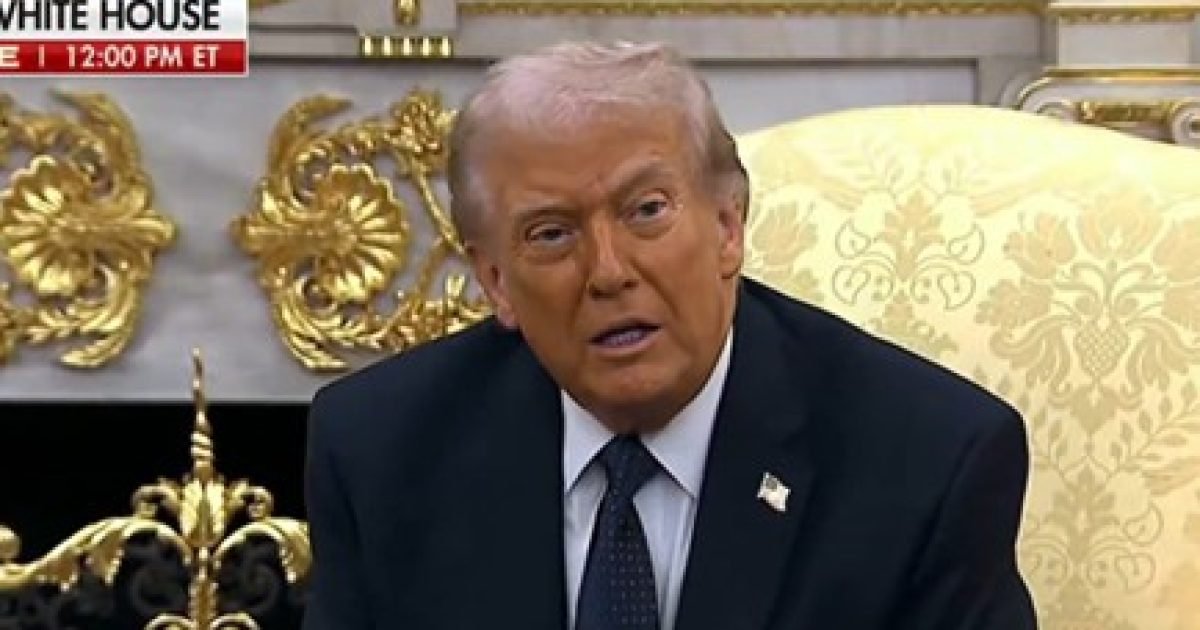
Fox News screenshot
The far-left, anti-American Spanish Government sided with Iran over America and is now about to pay a heavy price.
As The Daily Mail reported on Monday, Spain denied America permission to use their bases to attack Iran.
The country’s far-left, open borders Prime Minister, Pedro Sanchez, slammed Israel and the US for striking Iran and killing Supreme Leader Ayatollah Ali Khamenei.
Sanchez stated that his government rejected “the unilateral military action by the United States and Israel, which represents an escalation and contributes to a more uncertain and hostile international order.”
But now he and Spain are about to learn what the acronym FAFO means.
A short time ago, President Trump announced in the Oval Office that he ordered Treasury Secretary Scott Bessent to cut off all trade dealings with Spain for their treason.
“Spain has been terrible. In fact, I told Scott to cut off all dealings with Spain,” Trump said. “Spain actually said that we can’t use their bases. And that’s all right. We could use their base if we want. We could just fly in and use it. ”
“Nobody’s going to tell us not to use it, he added. We don’t have to.”
WATCH:
WOW: President Trump reveals he has ordered Treasury Secretary Scott Bessent to cut off all trade with Spain.
“Spain has been terrible. In fact, I told Scott to cut off all dealings with Spain. Spain actually said that we can’t use their bases. And that’s all right. We could… pic.twitter.com/626BGQzitQ
— RedWave Press (@RedWavePress) March 3, 2026
Trump went on to say that Spain alone would pay a price with the end of the trade partnership, since America has nothing it needs from Spain.
“Spain has absolutely nothing that we need,” Trump added. “We’re gonna cut off all trade with Spain. We don’t want anything to do with Spain.”
HOLY CRAP! President Trump is now CUTTING OFF all trade with Spain after their leftist PM said to not use bases in their country to strike Iran
“Spain has absolutely nothing we need…we’re gonna cut off ALL TRADE with Spain. We don’t want ANYTHING to do with Spain.”
FAFO!
pic.twitter.com/z6V931JmLW
— Eric Daugherty (@EricLDaugh) March 3, 2026
As Bessent noted, the Supreme Court has ruled that Trump has the authority to implement an embargo.
NO other President would be able to do this.
“I can TODAY stop everything having to do with… pic.twitter.com/dqzfGRq8Bl
— Nick Sortor (@nicksortor) March 3, 2026
Perhaps the next step is to kick Spain out of NATO, especially considering that it refuses to pay its necessary dues.
The post NEW: President Trump Cuts Off ALL TRADE With Spain After Far-Left Spanish Government Refuses to Let America Use Bases in their Country to Strike Iran (VIDEO) appeared first on The Gateway Pundit.

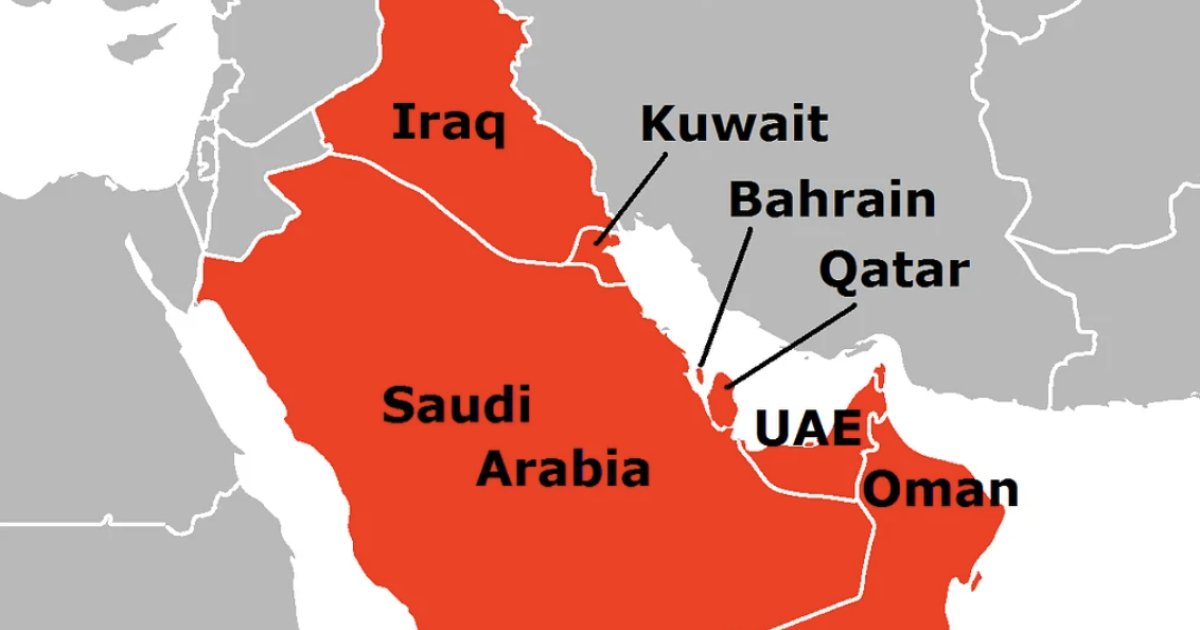
Map of Gulf States via Wikimedia Commons
With global energy markets trembling as drone attacks ripple across the Gulf, the United Arab Emirates and Qatar are quietly working behind the scenes to prevent a prolonged military confrontation between America, Israel, and Iran.
According to a report from Bloomberg News, citing individuals familiar with internal discussions, both governments are lobbying allies to encourage President Donald Trump to seek a swift off-ramp that would keep US military operations limited in scope and duration.
The Gulf monarchies—not acting out of diplomatic idealism—are seeking to prevent further destabilization that could imperil their economies, infrastructure, and global energy markets already shaken by recent strikes.
Sources have indicated that Abu Dhabi and Doha are attempting to assemble a broader coalition of European and regional partners to advance a rapid diplomatic resolution. The objective, insiders say, is to contain escalation before it spirals into a prolonged crisis with global consequences.
The concern is not theoretical. A Qatari internal assessment shared with Bloomberg News warned that if critical shipping lanes remain disrupted beyond midweek, natural gas markets could react far more violently than they did earlier this week during the initial surge.
European gas prices have already soared more than 50% following a drone strike that targeted Qatar’s liquefied natural gas facilities. The attack forced Doha to halt production at what is widely recognized as the world’s largest LNG export terminal.
That shutdown sent shockwaves through European energy markets still struggling with the aftereffects of previous supply disruptions caused by the ongoing Russo-Ukrainian war. The episode has bodly underscored how rapidly distant military actions can translate into direct economic consequences for Western consumers.
Privately, Gulf officials are scrambling to reinforce their own defenses. Both the UAE and Qatar are accelerating efforts to strengthen air defense systems, recognizing that drone warfare has become a defining feature of conflict in the 21st century.
According to people briefed on the matter, the UAE has requested assistance from allies to bolster medium-range air defense capabilities. Qatar, meanwhile, is seeking urgent support specifically tailored to counter drone threats, which regional officials now view as more immediate and persistent than traditional ballistic missiles.
An internal Qatari analysis reportedly concluded that existing Patriot interceptor missile stocks could be depleted within four days under current rates of use. That assessment highlights the intensity of recent aerial activity and the vulnerability of even well-funded Gulf states.
Officials at Qatar’s International Media Office and the UAE’s foreign ministry have not publicly commented on these developments. Nonetheless, diplomatic activity suggests growing unease among regional leaders.
UAE President Mohammed bin Zayed Al Nahyan and Qatari Emir Tamim bin Hamad Al Thani have held phone calls in recent days with European leaders, including British Prime Minister Keir Starmer, French President Emmanuel Macron, and German Chancellor Friedrich Merz. Those conversations reportedly focused on preventing escalation and stabilizing energy markets.
Since late February, when American and Israeli strikes against Iranian targets intensified, the conflict has widened rapidly. Nations that insist they are not parties to the fighting have nonetheless found their military bases, energy facilities, and civilian populations exposed to retaliation.
Airspace closures, maritime disruptions, and missile alerts have reminded global markets how fragile the energy arteries of the Gulf truly are. For Europe, heavily reliant on LNG imports, the stakes are particularly high.
The Strait of Hormuz remains a strategic chokepoint through which 20% of the world’s energy supply flows. Any sustained interference with shipping there will almost undoubtedly trigger cascading economic consequences that ripple far beyond the Middle East.
The unfolding crisis reinforces a lesson the world has repeatedly seen: global entanglements inevitably produce domestic consequences. When distant conflicts disrupt fuel and energy supplies, ordinary citizens in Europe and America pay the price.
For Gulf leaders, the calculus is pragmatic, with stability for them ensuring trade flows, investment, and internal security. Chaos, on the other hand, threatens all three.
Further complicating strategic planning is the rise of drone warfare. Cheap, difficult-to-intercept systems have changed the risk equation for energy-exporting states that once relied primarily on missile defense.
Even well-armed states are discovering that modern asymmetric threats can stretch defensive capacities. The reported four-day Patriot window illustrates the speed at which resources can be consumed in a high-intensity scenario.
While some voices across the political spectrum continue to argue for maximalist approaches, Gulf governments appear focused on de-escalation. For Europe in particular, the LNG shutdown serves as a stark warning that near-total dependence on fragile supply chains leaves it completely exposed to distant shocks and military moves entirely beyond its control.
The post Gulf State Allies Urge Swift De-Escalation as Energy Shock Ripples Across the Globe appeared first on The Gateway Pundit.
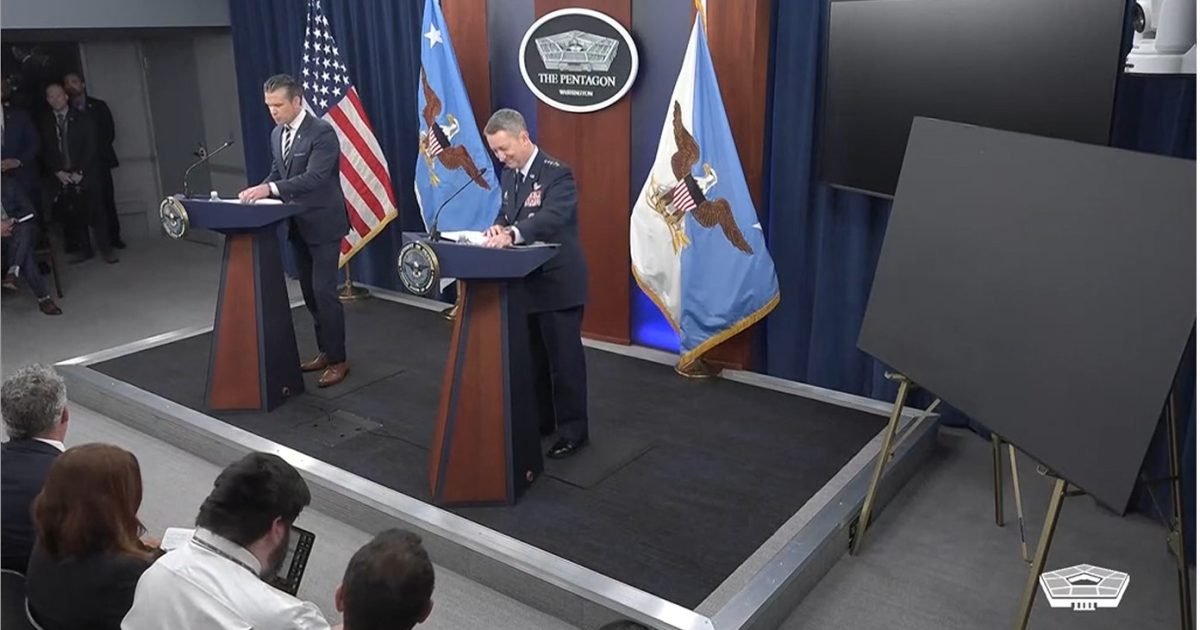
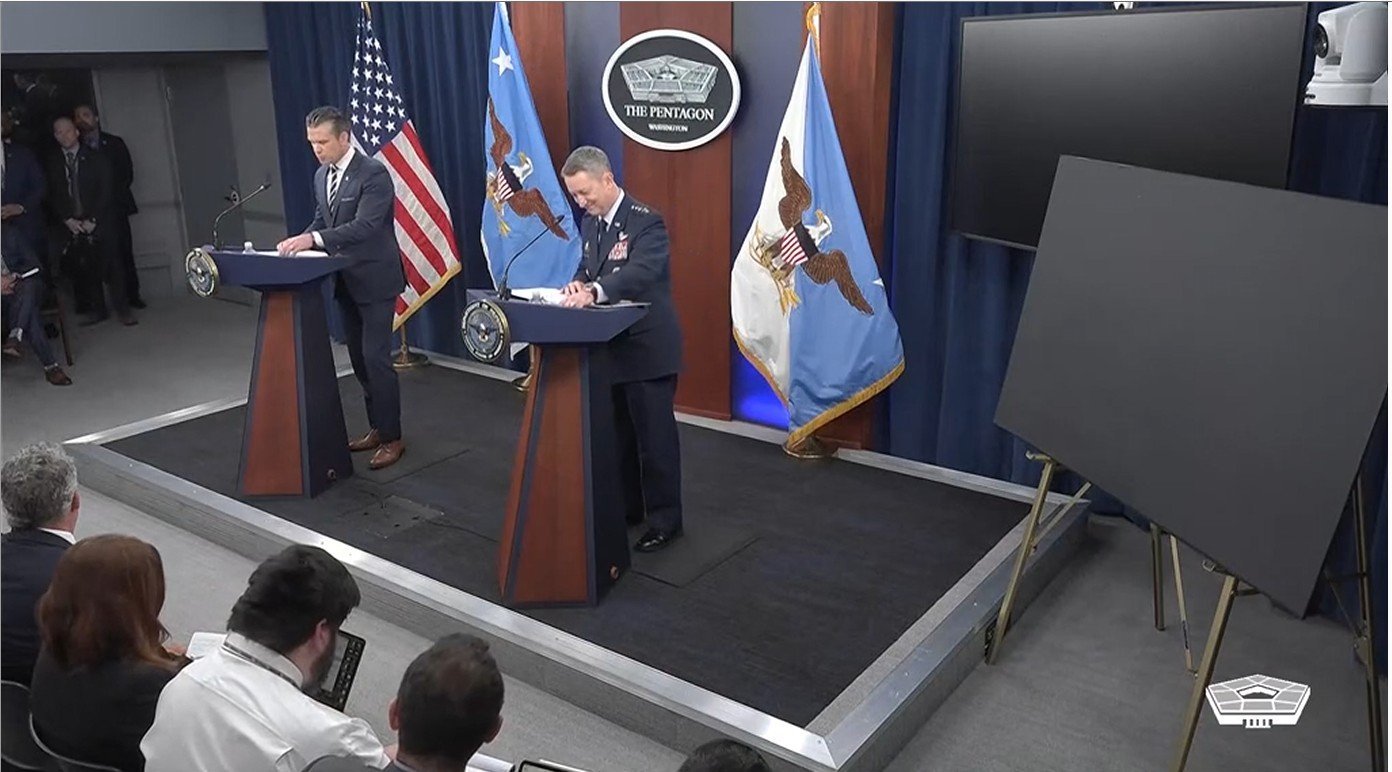 Secretary of War Pete Hegseth photo courtesy of the United States Air Force via screen grab
Liberals in the U.S., including Democratic lawmakers such as Sen. Tim Kaine, are calling President Trump’s strikes on Iran “an illegal war.” In opposition, Kaine is leading a War Powers resolution to halt the operation.
First, Senator Kaine is mistaken because there is no war with Iran. the United States has not declared war on Iran. The last formal U.S. declaration of war was against Romania, Bulgaria, and Hungary in 1942. Every military conflict since then, including Korea, Vietnam, the Gulf War, Iraq, and Afghanistan, was conducted under an Authorization for Use of Military Force or executive authority, not formal declarations of war.
The Trump administration’s actions against Venezuela in January 2026 and Iran in February have been justified primarily through Article II of the U.S. Constitution and existing counter-narcotics and counter-terrorism legal frameworks, rather than a formal declaration of war by Congress. The U.S. has not declared war on Iran, and neither has Iran declared war on the U.S. Consequently, it cannot be an illegal war.
The next argument Democrats are making is that President Trump did not obtain congressional approval for the strikes. However, under the War Powers Resolution, the president does not need congressional approval. Congress passed the War Powers Resolution in 1973, over President Nixon’s veto, to reassert its constitutional authority over military commitments.
Its key provisions require that the president notify Congress within 48 hours of committing forces to hostilities, that military action cease within 60 days unless Congress formally declares war or authorizes the action, and that Congress may pass a concurrent resolution to force withdrawal.
The 48-hour notification requirement has been satisfied. President Trump notified Congress within the required window.
Operations began February 28, 2026. The 60-day clock runs to approximately April 29, 2026. President Trump is currently on Day 4.
Under the 90-day total window, including the 30-day withdrawal period, the deadline would be approximately May 29, 2026.
A War Powers resolution may be introduced, but the president can veto it and continue the operation.
Every president since Truman has pushed back on congressional war-powers constraints, typically arguing that the commander-in-chief authority gives the president inherent power to use military force to protect national security. This is not new. Congress has failed to meaningfully constrain presidential war-making since 1973. Presidents have committed forces to Korea, Vietnam, Kosovo, Libya, Syria, Somalia, and dozens of other conflicts with minimal or no formal congressional authorization. Congress has repeatedly failed to enforce its own War Powers Resolution because members are reluctant to be seen as “against the troops” once operations begin, and the political cost of stopping a war in progress is high.
The executive branch has argued that provisions of the 1973 War Powers Resolution are themselves unconstitutional, a position many executive-branch lawyers have held. The provision most consistently challenged is the concurrent-resolution mechanism. The Supreme Court’s 1983 ruling in INS v. Chadha found that simple and concurrent resolutions approving or disapproving executive action are unconstitutional because they do not require presentation to the president.
A War Powers resolution to halt military action passes with a simple majority in both chambers. President Trump can veto it. Overriding that veto would require a two-thirds majority in both chambers, an extremely high bar given current Republican control of Congress.
Even if such a resolution were to pass, it would almost certainly be vetoed, and that veto would almost certainly be sustained. In practical terms, the resolution would be largely symbolic, a formal statement of congressional disapproval rather than a mechanism capable of stopping the operation.
Another argument critics raise is that, under an originalist reading of the Constitution, congressional approval is required for such use of force abroad. However, originalism is only one school of legal interpretation among several. It carries no more inherent authority than a living-constitutionalist reading or any other interpretive framework.
There is also strong precedent supporting the president’s interpretation of the Constitution, as every U.S. military action since 1942 has occurred without a formal declaration of war.
The final argument comes from abroad. Multiple international-law experts say the operations violate the U.N. Charter’s prohibition on the use of force against sovereign states.
The U.N. Charter is a treaty, and while the United States is a signatory, treaty obligations and their enforcement are politically and legally complex. No international body has enforcement authority over the United States that compels compliance. The U.N. Security Council, which could theoretically authorize or condemn military action, includes the U.S. as a permanent member with veto power, meaning the U.S. can block any resolution against itself.
International-law experts expressing opinions that something violates the U.N. Charter carry no legal weight in U.S. domestic law. They are academics and commentators, not judges, legislators, or treaty arbiters with binding authority over U.S. policy.
Successive U.S. administrations of both parties have conducted military operations that could be characterized as inconsistent with Article 2(4), including Grenada, Panama, Kosovo, Iraq, Libya, and Syria, and faced no binding legal consequences. The United States has never accepted that the U.N. Charter supersedes its constitutional authority to conduct foreign policy and military operations as the executive branch determines necessary.
U.S. Democrat lawmakers, international-law experts, and the U.N. are free to say what they wish about the strikes, but for those involved, the outcomes have been positive. Much of the Iranian diaspora and large segments of the population inside Iran are reportedly relieved that the ayatollah is gone. Saudi Arabia has expressed support for U.S. action, and terrorist groups such as Hamas, the Houthis, and Hezbollah are losing their primary patron. That loss of support could reduce their capacity to carry out terrorist attacks.
The post Trump’s Iran Strikes, Not a War, No Congressional Approval Needed appeared first on The Gateway Pundit.
Politics
State Department Issues “DEPART NOW” Alert for Americans Across Middle East as War Spillover Hits US Interests
 The US State Department has issued one of its broadest emergency advisories in years, urging American citizens to immediately leave more than a dozen Middle Eastern countries as the regional conflict intensifies and security risks multiply amid unchecked escalation.
The alert comes amid escalating retaliatory strikes by Iran targeting US and Israeli-linked assets across the Gulf.
In a sharply worded post on X, Assistant Secretary of State for Consular Affairs Mora Namdar wrote that Washington D.C., “urges Americans to DEPART NOW from the countries below using available commercial transportation, due to serious safety risks.”
The language signaled that officials believe the threat environment has moved well beyond precautionary levels.
The advisory covers Bahrain, Egypt, Iran, Iraq, Israel, the West Bank, Gaza, Jordan, Kuwait, Lebanon, Oman, Qatar, Saudi Arabia, Syria, the United Arab Emirates, and Yemen. Americans needing assistance have been directed to call the State Department’s 24-hour hotline and enroll in the STEP program for real-time security updates.
The @SecRubio @StateDept urges Americans to DEPART NOW from the countries below using available commercial transportation, due to serious safety risks. Americans who need State Department assistance arranging to depart via commercial means, CALL US 24/7 at +1-202-501-4444 (from… pic.twitter.com/vdplAik2Sq
— Assistant Secretary Mora Namdar (@AsstSecStateCA) March 2, 2026
The sweeping list reflects how quickly a regional confrontation can spill across borders. What may have started off as targeted strikes between states appears to have rapidly entangled aviation hubs, energy infrastructure, and civilian transit corridors far from the initial flashpoints.
The warning follows Iranian retaliatory operations launched after joint US-Israeli strikes killed Supreme Leader Ayatollah Ali Khamenei and several senior commanders. Tehran has since targeted American bases and strategic sites throughout the Gulf region.
Major aviation centers have not been spared. Dubai International Airport—widely regarded as the world’s busiest international hub—was reportedly hit during drone and missile activity, with damage and casualties reported near aviation facilities in Bahrain, Kuwait, and Iraq.
In response to the spreading violence, Bahrain, Iran, Iraq, Israel, Jordan, Kuwait, Qatar, and the UAE have implemented partial or full airspace closures. The result has been immediate and dramatic: more than 3,400 flights canceled across seven major Middle Eastern airports.
Hundreds of thousands of travelers have been affected, with social media footage showing crowded terminals and stranded passengers sleeping on airport floors. Dubai’s airport, which typically functions as a global crossroads, has reportedly resembled what one observer called a “massive waiting room.”
Transit passengers have been particularly vulnerable. Nearly half of those stranded in Dubai were connecting travelers, caught mid-journey as the regional aviation network unraveled.
The crisis has also affected non-Western carriers. Russian airlines, including Aeroflot, have canceled or rerouted flights to Tehran, Dubai, and Abu Dhabi, while Russia’s Association of Tour Operators (ATOR) estimates that roughly 8,000 Russian tourists are stranded after missing Middle Eastern connections.
For American citizens in the region, the practical problem is straightforward: commercial routes are narrowing by the hour. In some locations, such as Israel, commercial air travel was halted after the initial wave of strikes, creating severe bottlenecks for civilians attempting to depart.
This logistical reality explains the urgency behind the State Department’s language. “DEPART NOW” is an instruction issued before exit options disappear entirely.
Energy markets are watching closely as well. Gulf airspace overlaps with some of the world’s most critical shipping corridors, meaning instability can quickly translate into price spikes felt by consumers thousands of miles away. So far in Europe, energy prices have spiked 50%. In Britain, they’ve gone up even more.
The breadth of the State Department’s warning is striking, encompassing allies, adversaries, and countries that consider themselves bystanders, demonstrating how modern conflicts do not respect diplomatic categories.
The post State Department Issues “DEPART NOW” Alert for Americans Across Middle East as War Spillover Hits US Interests appeared first on The Gateway Pundit.

Retirement Is No Longer a Fixed Milestone for Older Americans, Survey Shows
From Flea Market Bargains to Storage Unit Surprises: 10 Lucky Finds That Paid Off Big

Wordle today: Answer, hints for March 3, 2026
How I Paid Off My Mortgage 10 Years Early On A Teacher’s Salary

Black Lives Matter Activist in Boston Pleads Guilty to Federal Fraud Charges – Scammed Donors to Fund Her Lifestyle

Get a lifetime subscription to the “ChatGPT for investors” for under $60
-
Business6 months ago
How I Paid Off My Mortgage 10 Years Early On A Teacher’s Salary
-
 Politics5 months ago
Black Lives Matter Activist in Boston Pleads Guilty to Federal Fraud Charges – Scammed Donors to Fund Her Lifestyle
-
 Tech6 months ago
Get a lifetime subscription to the “ChatGPT for investors” for under $60
-

 Tech5 months ago
Review: The Dreame H15 Pro CarpetFlex is the first wet/dry vacuum I liked
-
Business6 months ago
25 Low-Effort Side Hustles You Can Start This Weekend
-
Business6 months ago
9 Ways to Command a Six-Figure Salary Without a Bachelor’s
-

 Entertainment5 months ago
Fat Joe Recalls Bruno Mars Snapping on Him Over Question About Puerto Rican Roots: ‘Broke My Heart’
-
Business6 months ago
25 Side Hustle Jobs With Great Pay