
Politics
Iran’s Information War: Crushing Protesters While Targeting Israel and the United States

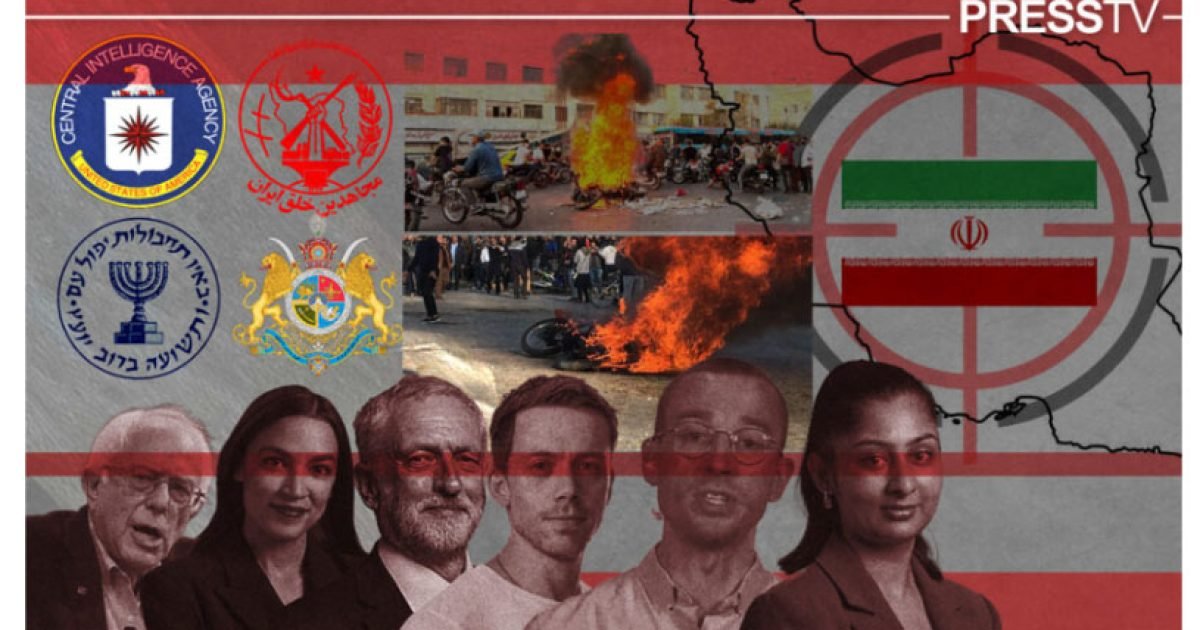
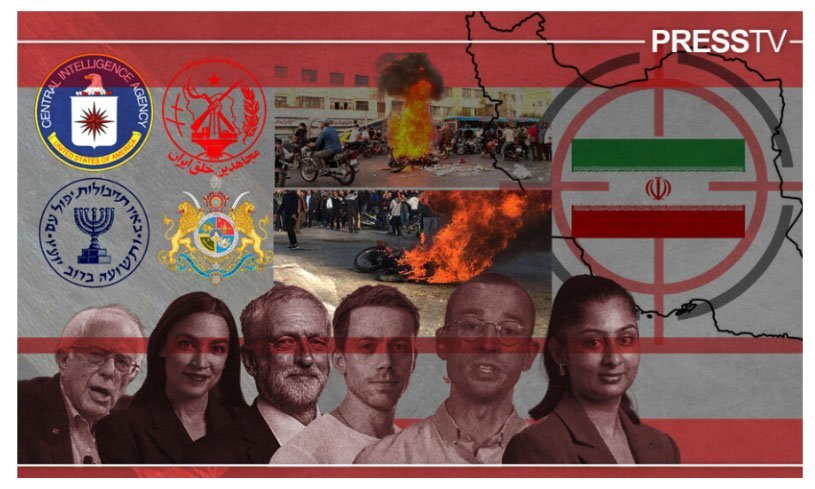 PressTV is the Iranian regime’s propaganda channel, which broadcasts in both English and Hebrew, vilifying the U.S. and Israel.
When mass protests erupted across Iran in late December 2025, driven by economic collapse and public fury at the regime, the Islamic Republic responded on two fronts simultaneously. Security forces killed thousands in the streets. But the regime’s propaganda apparatus launched an equally aggressive campaign, designed not just to survive the crisis, but to turn it into a weapon against its foreign enemies.
A detailed analysis published in February 2026 by the International Institute for Counter-Terrorism (ICT) documents how Tehran deployed a structured, phased information warfare strategy during the December 2025 to January 2026 protests. The findings reveal a regime that treats narrative control as essential to its survival and never stops targeting Israel and the West. At the same time, many of its own citizens despise the government so much that they are willing to risk being shot for a chance to speak out against it.
Iran’s information warfare apparatus developed as a practical response to the country’s conventional military limitations. Iran’s primary enemies are the US and Israel, and it has long been believed that Iran could not beat the US in a direct military conflict. Consequently, the regime has made information warfare a central strategic pillar of its survival.
The system combines ideological messaging, psychological pressure, targeted disinformation, media management, and digital network coordination to shape how domestic and foreign audiences perceive events. Its goals are consistent: to portray the United States as hypocritical and aggressive, to frame Israel as the primary enemy in a broader civilizational struggle, and to maintain the regime’s grip on power against any challenger.
The machinery is organized in a clear top-down structure. Khamenei or senior officials issue the core narrative. The Islamic Revolutionary Guard Corps (IRGC) and its media divisions translate those directives into operational content, arrests, confessions, documentary videos, and alleged field evidence.
A sprawling network of semi-official Telegram, Twitter, Instagram, and other channels in multiple languages, operating under the banner of the “axis of resistance,” then amplifies the message globally.
When protests first broke out, the regime’s initial response was carefully calibrated. Pro-government channels largely avoided the subject, apparently hoping the demonstrations would simply fade. When that failed, Khamenei addressed the situation directly on January 3, acknowledging that economic frustration was legitimate, while drawing a sharp distinction between peaceful protesters and what he characterized as “mercenaries” seeking to destabilize the state.
By conceding that some grievances were valid, the regime insulated itself from accusations of complete indifference. By defining violent protesters as rioters rather than dissidents, it established the justification for lethal suppression. The message was aimed primarily at the Iranian public and at security forces who needed ideological cover for the crackdown to come.
By January 9, as the protests intensified and international attention grew, the regime shifted from vague references to “mercenaries” to explicit accusations against the United States and Israel. Khamenei’s speech that day established what would become the dominant narrative for the remainder of the crisis: the protests were not an organic expression of Iranian discontent but a coordinated foreign operation, a covert act of war by Washington and Tel Aviv against the Iranian people.
The IRGC followed with what it presented as supporting evidence: arrested agents, confessional videos, and alleged documentation of foreign weapons distribution. The narrative divided protesters into two categories: paid foreign operatives at the top, and manipulated, innocent young Iranians who had been deceived into serving enemy agendas.
This framework accomplished several things at once. It delegitimized the protests. It allowed the regime to position itself as the defender of ordinary Iranians against external predators. And it provided retroactive justification for the massacre of thousands.
Three sub-themes ran through this phase. First, American hypocrisy: the United States, which had struck Iranian territory during the 12-Day War of June 2025, was now presenting itself as a champion of the Iranian people’s freedom. The regime hammered this contradiction relentlessly, packaging it in visually striking Telegram posts showing Trump being compared directly to the suffering of Iranian civilians.
Second, economic motivation: U.S. interest in Iran, the regime argued, was always about oil and resources, not human rights, drawing explicit parallels to American actions in Venezuela days earlier. Third, domestic U.S. instability: pro-government channels amplified footage of anti-ICE protests in American cities, suggesting that Trump had no standing to lecture anyone about governance.
Once the protests had been bloodily suppressed, the regime pivoted to a victory narrative. Beginning around January 12, official and affiliated channels shifted their messaging to portray the crackdown as a historic triumph of the Iranian nation over foreign conspiracy. Pro-government rallies were staged and filmed. Senior officials made public appearances projecting confidence. The “great Iranian nation,” in the language of state media, had faced down its enemies and prevailed.
The victory narrative served the domestic audience primarily, providing psychological closure, reinforcing the regime’s claim to popular legitimacy, and shutting down any remaining space for organized resistance. For external audiences, it was designed to rebut Western media coverage of the massacre, presenting a stable government with broad public support instead.
In the final phase, following Khamenei’s January 17 speech, the regime moved to recontextualize the entire episode within its broader confrontation with the West. The protests were no longer a domestic disturbance that had been suppressed; they were a new front in a war that had never actually ended. The June 2025 twelve-day conflict with Israel, in this telling, was merely a tactical pause. The unrest of December and January was the enemy’s next offensive, and Iran had repelled it.
This reframing served a crucial mobilization function. Casting the protests as an act of war transformed what had been a crisis of legitimacy into a national security emergency requiring unified public support. It also served as a warning to the international community: any future Iranian retaliation for the protests, against U.S. or Israeli targets, would be framed as a continuation of legitimate self-defense.
One of the report’s most significant findings is that throughout this entire domestic crisis, Iran’s foreign influence operations against Israel and the West continued uninterrupted, and in some respects intensified.
PressTV’s Hebrew-language channel sustained a steady stream of content designed to portray Israel as economically declining, politically fragmented, and morally discredited. Press TV is a state-owned media organization directly funded and controlled by the Iranian government. It operates as the English-language division of Islamic Republic of Iran Broadcasting (IRIB), which is the only legal broadcaster within Iran. The Hebrew-language service is the latest expansion of this state media apparatus targeted at Israel. The head of the IRIB was appointed directly by the Supreme Leader of Iran, Ayatollah Ali Khamenei, until his death on February 28, 2026. The content is unsurprisingly pro-regime and anti-U.S. and anti-Israel.
Hebrew-language articles highlighted coalition instability, internal protests, ultra-Orthodox confrontations with security forces, and demographic pressures, all framed to erode Israeli public confidence and sustain a sense of internal decay.
English-language channels targeted American audiences with footage of domestic unrest, framing U.S. political divisions as evidence of systemic collapse. Iranian-affiliated networks also sent threatening text messages directly to Israeli civilians’ phones, urging recipients to watch the sky at midnight in anticipation of strikes, a psychological operation designed to induce fear and undermine civilian morale without firing a single missile.
The regime’s ability to sustain coordinated foreign influence operations while simultaneously managing a catastrophic domestic uprising suggests that this system is deeply institutionalized and not easily disrupted.
For the United States, Israel, and allied governments now engaged in Operation Epic Fury, this has direct implications. Iran’s capacity to shape narratives about the current conflict, framing military strikes as atrocities, portraying Western governments as aggressors, mobilizing proxy audiences from Nigeria to Pakistan, is not a secondary concern. It is an active component of the battlefield.
The post Iran’s Information War: Crushing Protesters While Targeting Israel and the United States appeared first on The Gateway Pundit.

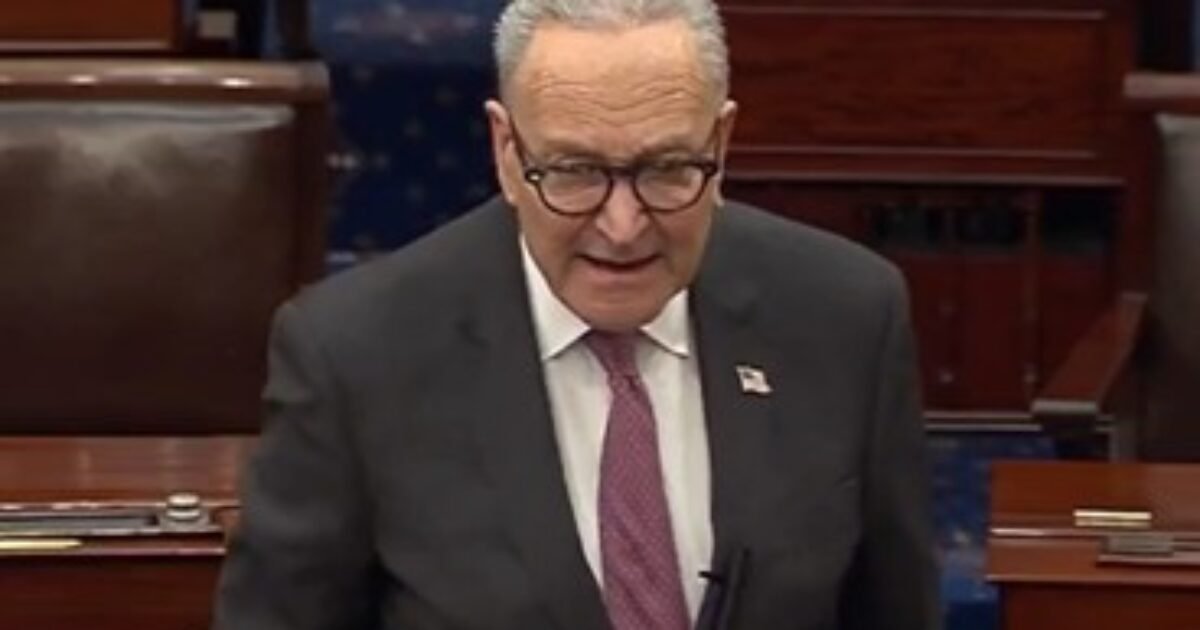
Senate Democrats on Thursday once again blocked funding for the Department of Homeland Security as Islamic terrorists attack the homeland.
The motion to proceed failed in a 51-46 vote.
Democrat Senator John Fetterman voted with the Republicans to advance the DHS funding bill.
The Hill reported:
Senate Democrats on Thursday defeated a motion to proceed to a House-passed bill to reopen the Department of Homeland Security and end the 27-day shutdown that has hampered the functions of the Transportation Security Administration (TSA) and other critical agencies.
The motion failed by a vote of 51 to 46. Centrist Sen. John Fetterman (Pa.) was the only Democrat to vote with Republicans to advance the funding bill. It needed 60 votes to advance.
It marked the fourth time since Feb. 12 that Democrats have voted to block Homeland Security funding legislation.
The vote capped a day of skirmishes on the Senate floor between Democrats and Republicans on how to break the funding deadlock.
Democrats voted against the Homeland Security appropriations bill because it includes funding for Immigration and Customs Enforcement (ICE) and Customs and Border Protection (CBP), two agencies they say need reforms after immigration agents shot and killed two U.S. citizens in Minneapolis.
On Thursday, there were two separate Islamic terror attacks in the US.
36-year-old Mohamed Bailor Jalloh, who was previously convicted of providing material support for ISIS, opened fire at Old Dominion University on Thursday morning.
One person died, and another was wounded.
According to reports, Jalloh shouted Allahu Akbar as he opened fire.
Later Thursday, a naturalized US citizen from Lebanon attacked a synagogue in Michigan.
41-year-old Ayman Mohamad Ghazali rammed his vehicle into Temple Israel in West Bloomfield Township and opened fire.
Armed security engaged him, and he was found deceased and badly burned in his vehicle.
The FBI said both attacks are being investigated as terrorism.
The post Senate Democrats Block DHS Funding Bill as Jihadists Attack Homeland appeared first on The Gateway Pundit.


Republican Sen. Josh Hawley of Missouri on Wednesday announced he is introducing a bill that would ban the abortion pill on the grounds that it is a danger to the women who take it.
“The science is clear: the chemical abortion drug is inherently dangerous to women and prone to abuse. Yet major companies like Danco Laboratories are making billions off it,” the pro-life senator said, according to a news release on Hawley’s website.
He said the bill would not only ban mifepristone, but also “empower women to sue its manufacturers. Congress must act now to protect the health and safety of women.”
Republican Rep. Diana Harshbarger of Tennessee said she would introduce a companion version of the bill in the House.
“Evidence now suggests that the real-world risks to women are far greater than the federal government has acknowledged,” she said in the news release. “That’s why I’m proud to join Senator Hawley in introducing the Safeguarding Women from Chemical Abortion Act, to restore accountability and help ensure that women’s health — not politics — guides federal drug policy.”
WATCH: @HawleyMO announces a bill to ban mifepristone, the pill used for chemical abortions. pic.twitter.com/aQHK8uC7dM
— Alliance Defending Freedom (@ADFLegal) March 11, 2026
The release stated almost 11 percent of women who use the drug have a serious health complication within 45 days.
“Because the drug comes in capsule form and because it is at this juncture almost completely unregulated, it is inherently prone to abuse,” Hawley said, according to WGN-TV in Chicago.
“Over the years, one liberal administration after another, President Obama and then President Biden, removed almost all of the safety protocols around mifepristone such that today it is almost wholly unregulated,” he said. “They did it because of abortion politics. They did it because they wanted to turn mifepristone into the driver of abortion on demand.”
During a Wednesday media event, several women who took mifepristone said the drug multiplied the effects of killing their babies, according to a report about Hawley’s bill published by the World News Group, an explicitly Christian news organization based in Asheville, North Carolina.
One woman quoted in the World New Group’s report said the bleeding she experienced was so intense that she was put on life support.
“I developed a severe infection behind my uterus that went undetected until it became life-threatening. My condition deteriorated so rapidly that I was rushed into the ICU,” she said, according to WGN, noting she had a partial hysterectomy.
“I was [in a] medically induced coma for a month. During this time, I required several blood transfusions,” she said.
Hawley’s website included statements from pro-life leaders praising the bill, noting that mail-order abortion is one reason the United States actually saw an increase in abortions after the Supreme Court’s Dobbs decision that overturned Roe v. Wade:
“The Biden-era policy that enabled the abortion industry to adopt an ‘Amazon-style’ model—shipping abortion drugs directly to doorsteps across America, even into states where unborn life is protected—has contributed to a dramatic increase in the killing of unborn children following the overturning of Roe v. Wade, rather than the decrease many expected,” said Tony Perkins, president of the Family Research Council.
Marjorie Dannenfelser, president of SBA Pro-Life America, said the bill addressed the biggest issue in abortion availability.
“The number 1 factor making abortion America’s top cause of death is mail-order abortion drugs, a dangerous relic of the Covid and Biden era that inexplicably continues to this day. This makes it impossible for states to protect women and children, creating a severe public health crisis,” Dannenfelser said.
Lila Rose, Founder and President of Live Action, said the bill is overdue.
The abortion pill “has fueled a deadly and deeply inhumane abortion industry that has killed millions of preborn babies and leaves women abandoned to suffer the physical and emotional consequences alone,” she said.
“For years, the abortion lobby has marketed these drugs as safe and easy while concealing the truth: nearly every time a pregnant mother takes the abortion pill, it ends the life of her living human child, and far too many women are left without real medical care when they are hemorrhaging or have a blood infection due to the abortion pill.”
As noted by KMOV-TV in St. Louis, Hawley introduced the bill last year, but it did not pass.
This article appeared originally on The Western Journal.
The post New Bill to Ban Abortion Pill Hits Senate appeared first on The Gateway Pundit.
Politics
Palantir CEO Says AI Will Take Power Away From Democratic Voters and Toward Working-Class Men (VIDEO)
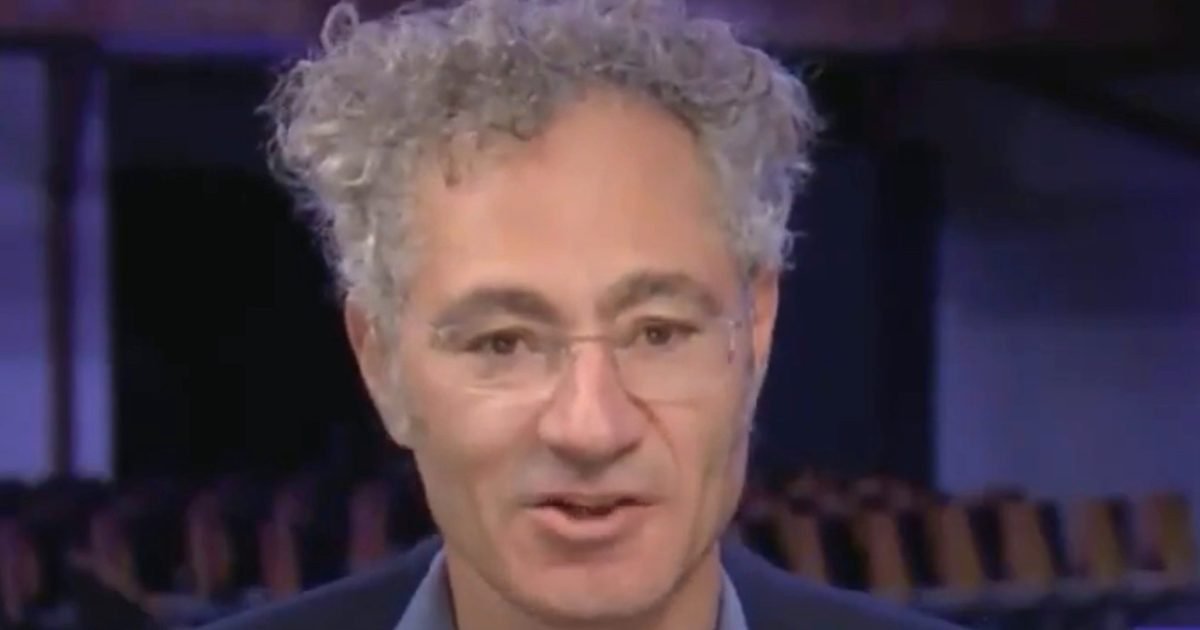
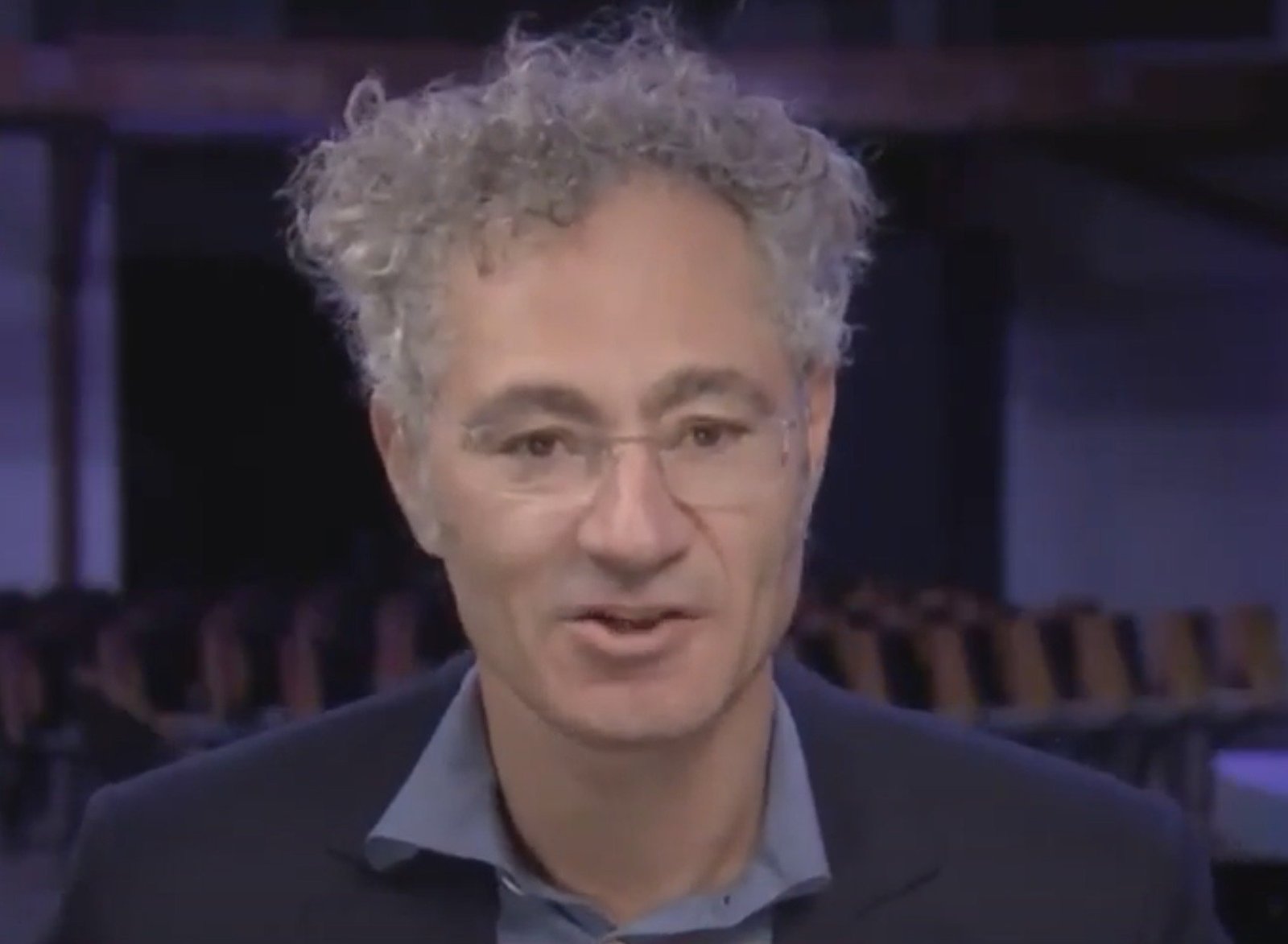 Alex Karp, during an interview with CNBC on Thursday.
Palantir CEO Alex Karp has said that artificial intelligence (AI) could shift economic influence away from highly educated voters who tend to support Democrats and toward vocationally trained, working-class men.
In an interview with CNBC, Karp discussed the broader societal impact of artificial intelligence and how it is expected to transform employment.
“This technology disrupts humanities-trained, largely Democratic voters, and makes their economic power less.”
“And increases the economic power of vocationally trained, working-class, often male, uh voters,” Karp said.
“So these disruptions are gonna disrupt every aspect of our society,” he said.
“To make this work, we have to come to an agreement of what it is we’re going to do with the technology; how are we gonna explain to people who are likely gonna have less good, and less interesting jobs.”
Palantir CEO Alex Karp believes AI will reduce the political and economic power of white collar female (mostly Democrat) voters:
“If you are going to disrupt the economic and political power significantly of one party space, highly educated, often female voters who vote mostly… pic.twitter.com/riTUAlXCZH
— Wall Street Mav (@WallStreetMav) March 12, 2026
The data analytics and artificial intelligence company, which was founded by Trump backer Peter Thiel, builds platforms designed to analyze enormous datasets and is widely used by governments, intelligence agencies, and major corporations.
Palantir first gained prominence for its work with U.S. intelligence and defense agencies, including the CIA, the Department of Defense, and other national security bodies.
Its software has been used for counterterrorism analysis, military planning, and intelligence operations.
In recent years, the company has also expanded into commercial sectors, providing data and artificial intelligence platforms to companies in industries such as healthcare, manufacturing, finance, and energy.
However, Karp insisted that the technology still carries serious risks but that America must win the AI race against adversaries such as China.
“These technologies are dangerous societally,” Karp said.
“The only justification you could possibly have would be that if we don’t do it, our adversaries will do it,” he continued. “And we will be subject to their rule of law.”
“Why is it that we’re absorbing the risk of disrupting the very fabric of our society, including the most powerful parts of our society, if it’s not because it’s about maintaining our ability to be American in the near term and long term?” he said.
Karp has previously suggested America has empathy for everyone except for working-class white males.
Palantir CEO Alex Karp: ‘Our Country Has Empathy For Everybody But Working Class, Particularly White Males’ (VIDEO)
The post Palantir CEO Says AI Will Take Power Away From Democratic Voters and Toward Working-Class Men (VIDEO) appeared first on The Gateway Pundit.


Senate Democrats Block DHS Funding Bill as Jihadists Attack Homeland

Save $1,150 on this heavy-duty Anker portable power station

New Bill to Ban Abortion Pill Hits Senate

SEND IN THE TROOPS! At Least 5 Dead, 10 Wounded So Far in Chicago Weekend Shootings
How I Paid Off My Mortgage 10 Years Early On A Teacher’s Salary

Black Lives Matter Activist in Boston Pleads Guilty to Federal Fraud Charges – Scammed Donors to Fund Her Lifestyle
-
 Politics6 months ago
SEND IN THE TROOPS! At Least 5 Dead, 10 Wounded So Far in Chicago Weekend Shootings
-
Business6 months ago
How I Paid Off My Mortgage 10 Years Early On A Teacher’s Salary
-
 Politics6 months ago
Black Lives Matter Activist in Boston Pleads Guilty to Federal Fraud Charges – Scammed Donors to Fund Her Lifestyle
-

 Tech6 months ago
Get a lifetime subscription to the “ChatGPT for investors” for under $60
-

 Tech6 months ago
Review: The Dreame H15 Pro CarpetFlex is the first wet/dry vacuum I liked
-
Business6 months ago
25 Low-Effort Side Hustles You Can Start This Weekend
-
Business6 months ago
9 Ways to Command a Six-Figure Salary Without a Bachelor’s
-

 Entertainment5 months ago
Fat Joe Recalls Bruno Mars Snapping on Him Over Question About Puerto Rican Roots: ‘Broke My Heart’