
Politics
German President Calls Trump’s Iran War “Illegal” and a “Disastrous Mistake”

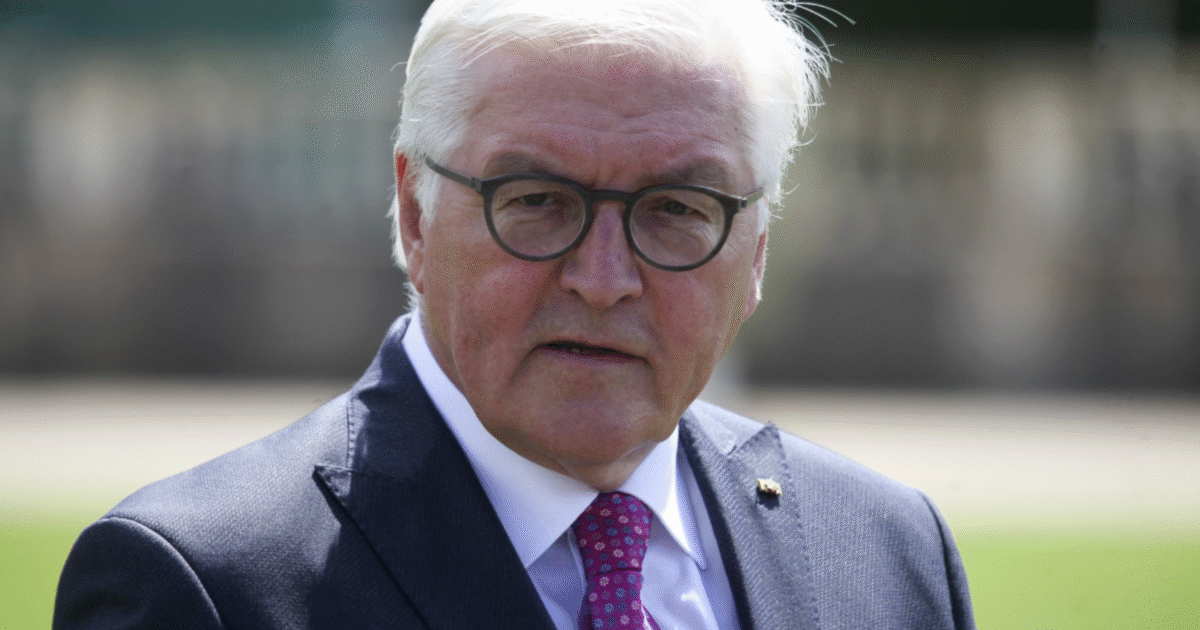
German President Frank-Walter Steinmeier via pxhere
A sharp and unusually public rift has opened in transatlantic relations, as German President Frank-Walter Steinmeier delivered a blunt critique of the ongoing war with Iran, marking one of the most direct European challenges to American leadership in recent years. His remarks have ignited debate not only about the conflict itself, but about Europe’s future path in a rapidly shifting global order.
Speaking before diplomats in Berlin, Steinmeier, a member of the Social Democratic Party (SDP), described the war as a “politically disastrous mistake,” arguing that it represents a fundamental break from established norms. His tone stood out in a continent where many leaders have chosen more cautious language.
“Our foreign policy does not become more convincing just because we do not call a breach of international law a breach of international law,” Steinmeier said. He added that, in his view, the war is “contrary to international law.”
The German president went further, questioning the justification for the conflict. He argued that claims of an imminent Iranian threat to U.S. targets “did not hold water,” framing the war as avoidable rather than inevitable.
Steinmeier’s intervention is significant not because of his formal powers—which are largely ceremonial—but because of the signal it sends within Germany’s political establishment. His comments reflect growing unease across Europe as the consequences of the conflict ripple outward.
At the same time, the response from Berlin has been far from unified. Chancellor Friedrich Merz has taken a more cautious approach, avoiding explicit legal judgments while acknowledging that the war raises “major questions” about Europe’s security.
This divergence highlights a broader tension within Europe: how to balance traditional alliances with an increasingly independent strategic outlook. While some leaders remain aligned with Washington, others are beginning to openly question the costs of that alignment.
From a national-conservative perspective, the episode underscores a deeper problem—Europe’s long-standing dependence on external powers for its security and strategic direction. For decades, many European governments have relied heavily on the United States, often at the expense of their own sovereignty.
Now, voices like Steinmeier’s are calling for a recalibration. He argued that Germany must reduce its reliance on the U.S., particularly in defense and technology—areas he described as central to national power.
“Germany has to apply the lessons learned from excessive dependencies,” he said, referencing the country’s earlier reliance on Russian energy. The implication is clear: dependence, whether on Moscow or Washington, carries risks.
This shift is already being felt in economic terms. Trade patterns between Germany and the United States have come under strain, with tariffs and policy disagreements reshaping long-standing relationships.
At the same time, China has re-emerged as Germany’s leading trading partner, highlighting the complexity of Europe’s global positioning. For critics of globalization, this raises further questions about whether Europe is merely swapping one dependency for another.
Steinmeier also pointed to the technological domain as a critical battleground. He warned that Europe’s reliance on U.S.-based technology companies leaves it vulnerable, both economically and politically.
“Europe as a technology hub has talent, markets, opportunities,” he said, urging the continent to build its own capabilities rather than depend on external providers. This call aligns with a broader push among European leaders for greater digital sovereignty.
The backdrop to all of this is the war with Iran itself, which has entered a volatile phase with global consequences. Energy markets have been shaken, supply chains disrupted, and security concerns heightened across multiple regions.
For many in Europe, the conflict is not just a distant geopolitical event but a direct economic and strategic challenge. Rising energy costs and instability in key trade routes have brought the realities of global conflict closer to home.
Yet the debate unfolding in Berlin is about more than the war. It reflects a growing recognition that Europe must define its own path rather than simply follow the lead of larger powers.
Steinmeier drew a striking comparison to Germany’s break with Russia following the 2022 invasion of Ukraine. He suggested that relations with the United States may now be entering a similarly irreversible phase.
“Just as there will be no going back in relations with Russia, there will be no going back in transatlantic relations to before January 20, 2025,” he said, referring to the start of President Donald Trump’s second term.
Such language would have been unthinkable just a few years ago. It reflects the extent to which global alliances are being re-evaluated in light of shifting priorities and pressures.
Importantly, Steinmeier stopped short of directly criticizing Israel, focusing his remarks instead on broader strategic and legal concerns. This careful positioning reflects the delicate balance European leaders are attempting to maintain.
Within Germany, the president’s comments are likely to intensify domestic debate. The governing coalition itself is divided, with center-left voices more critical of the war than their conservative counterparts.
Across Europe, similar divisions are emerging. Some governments emphasize solidarity with traditional allies, while others prioritize national interests and economic stability.
From a populist perspective, this moment reinforces a key argument: that nations must retain the ability to make independent decisions based on their own interests, rather than relying on external frameworks or assumptions.
The calls for greater autonomy in defense and technology are part of a broader shift toward reasserting national control. Whether this leads to a more cohesive Europe or further fragmentation remains to be seen.
What is clear is that the war in Iran has accelerated existing trends. It has exposed vulnerabilities, tested alliances, and forced governments to confront difficult questions about their future direction.
For Germany, the challenge now is translating rhetoric into policy. Reducing dependency on the United States will require significant investment and political will—neither of which can be taken for granted.
For Europe as a whole, the stakes are even higher. The continent stands at a crossroads between continued reliance on global structures and a more self-directed path rooted in sovereignty.
As the conflict continues, the debate sparked by Steinmeier’s remarks is unlikely to fade. Instead, it may mark the beginning of a broader reassessment of Europe’s place in the world.
In that sense, the significance of his speech extends beyond immediate politics. It signals a shift in mindset—one that both supporters and critics will be watching closely in the months and years ahead.
The post German President Calls Trump’s Iran War “Illegal” and a “Disastrous Mistake” appeared first on The Gateway Pundit.

Politics
Joe Kent Says He’d Testify in Charlie Kirk Murder Case, Even If It Helps Accused Assassin Tyler Robinson
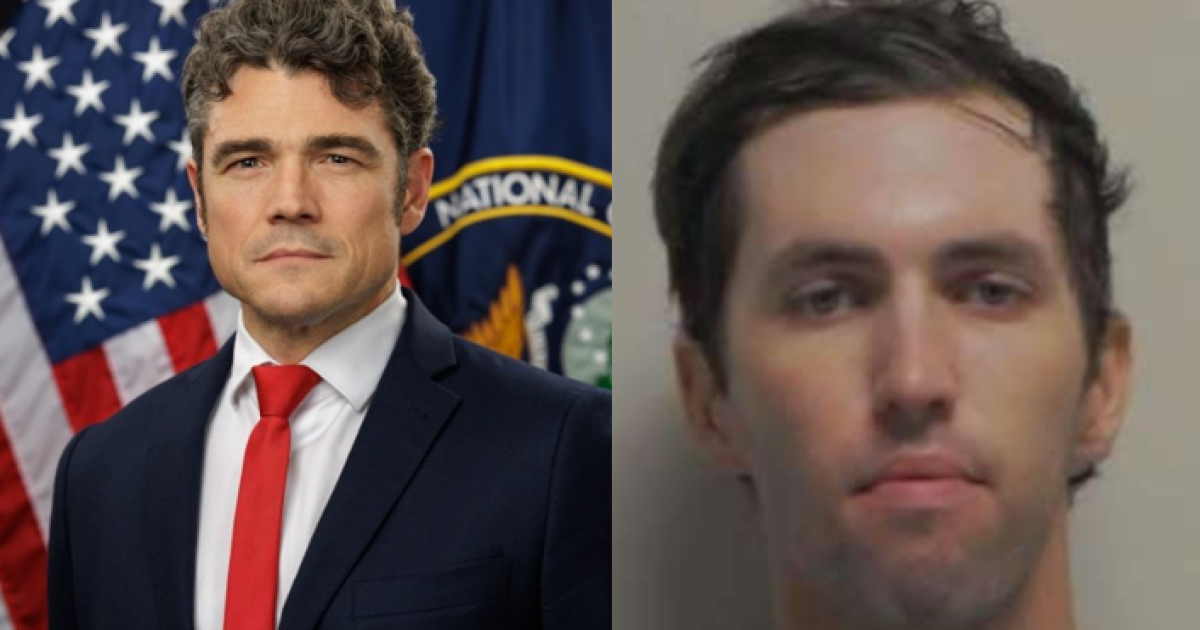
Former National Counterterrorism Center director Joe Kent is receiving backlash after saying that, if needed, he will serve as a witness for the defense in the murder trial of Charlie Kirk.
During an interview with journalist Michael Shellenberger, Joe Kent said he questions whether the lone shooter narrative explains Charlie Kirk’s assassination.
Kent shared, when he was the director of the National Counterterrorism Center, “The FBI was pretty forceful in saying we couldn’t investigate further.”
He later added that he could be called as a witness by the defense in the case of Tyler Robinson, who is accused of killing Charlie Kirk, after suggesting a foreign power may have been behind Kirk’s assassination.
When Shellenberger noted that his defense could assist Robinson’s defense, Kent responded, “Then, honestly, so be it. If it gets us to the truth.”
Joe Kent says he is skeptical that Tyler Robinson, who confessed to killing Charlie Kirk, was the lone shooter. That accusation could undermine the prosecutors’ case against Robinson. Kent says he knew of the risk before he decided to speak out. pic.twitter.com/hd6QNHw4jo
— Michael Shellenberger (@shellenberger) March 24, 2026
Per Yahoo News:
Joe Kent says he is skeptical that Tyler Robinson, who confessed to killing Charlie Kirk, was the lone shooter. That accusation could undermine the prosecutors’ case against Robinson. Kent says he knew of the risk before he decided to speak out.
The former Director of the National Counterterrorism Center, Joe Kent, says that the FBI did not properly investigate the assassination last fall of conservative leader Charlie Kirk. “The FBI was pretty forceful in saying we couldn’t investigate further,” he told Public. “I saw no action being taken.”
Tyler Robinson confessed to killing Kirk in a text message and a note to his trans-identified romantic partner. His defense team may now be able to use Kent’s allegations that the government is suppressing evidence and did not do a proper investigation to their advantage.
Kent said he knew that he might be called as a witness before he made his statements that a “foreign nexus” may have been involved in Kirk’s assassination. “I was definitely warned of that over and over again,” said Kent. “If I end up having to play that role, then I’ll do it. It’s not something I’m seeking.” When pressed that his testimony could help the Robinson defense, Kent said, “Then, honestly, so be it. If it gets us to the truth… That’s obviously the risk I’m taking.”
In response to Kent’s statement, Charlie Kirk’s longtime producer and now co-host of the Charlie Kirk Show, Blake Neff, took to X to vent his frustration with Kent’s comments.
Neff wrote, “Tyler Robinson literally confessed to his parents, was turned in by them, and has his DNA all over the weapon used to kill Charlie.
“But some people are so obsessed with hating Israel, the same thing they are obsessed with literally every day, that they will try to help a murderer get off so they can keep pursuing their daily obsession,” added Neff.
LOOK:
Tyler Robinson literally confessed to his parents, and was turned in by them, and has his DNA all over the weapon used to kill Charlie.
But some people are so obsessed with hating Israel, the same thing they are obsessed with literally every day, that they will try to help a…
— Blake Neff (@BlakeSNeff) March 24, 2026
Andrew Kolvet, who also co-hosts the Charlie Kirk Show, said, “Joe Kent just crossed a red line, and it’s a massive betrayal of Charlie, his wife, his kids, and the entire TPUSA family.”
WATCH:
Shortly after Robinson’s arrest, the prosecutors released a probable cause affidavit detailing the evidence gathered immediately after Charlie’s assassination.
The evidence presented at that time was overwhelming.
In the months that have followed, we know the investigation has… pic.twitter.com/zD2jFMsya7
— Andrew Kolvet (@AndrewKolvet) March 24, 2026
The post Joe Kent Says He’d Testify in Charlie Kirk Murder Case, Even If It Helps Accused Assassin Tyler Robinson appeared first on The Gateway Pundit.
Politics
Firetruck in Deadly Collision with Air Canada Plane Lacked Transponder – Tower Couldn’t Track Vehicle


Senior Aviation investigators released preliminary findings on what led up to the deadly collision between an Air Canada plane and a firetruck at LaGuardia’s Airport.
Footage of the plane crash shows the Air Canada flight barreling down the tarmac right before it collides with the emergency vehicle.
“Stop, Truck 1. Stop,” the transmission said. “Frontier 4195, stop there please. “Stop, stop, stop, stop,” an air traffic controller can be heard saying over the radio transmission.
WATCH:
The truck didn’t stop in time.
It is unclear if the driver of the firetruck hit the brakes or tried to maneuver out of the way before the collision.
According to CBC, the pilots who died in the crash were identified as pilot Antoine Forest from Coteau-du-Lac, Quebec, and co-pilot MacKenzie Gunther.
The deceased pilots were described as “two young men at the start of their careers.”
Aviation investigators revealed that the firetruck lacked a transponder so the tower couldn’t track the vehicle.
.@NTSB Senior Aviation Accident Investigator Doug Brazy delivers preliminary findings on leadup to deadly LaGuardia Airport plane crash. pic.twitter.com/1vAS9EUlMl
— CSPAN (@cspan) March 24, 2026
The Associated Press reported:
Federal investigators say a runway warning system didn’t trigger an alarm before an Air Canada jet and a fire truck collided at New York’s LaGuardia Airport.
National Transportation Safety Board chairwoman Jennifer Homendy said during a news conference Tuesday that the system didn’t work as intended because the fire truck did not have a transponder.
The plane carrying more than 70 people slammed into the fire truck while landing late Sunday night, killing the two pilots and injuring several passengers.
Most, though, were able to escape the mangled aircraft, and a flight attendant still strapped in her seat survived after being thrown onto the tarmac.
The post Firetruck in Deadly Collision with Air Canada Plane Lacked Transponder – Tower Couldn’t Track Vehicle appeared first on The Gateway Pundit.
Politics
British Female Sailor Court-Martialed for ‘Sexually Assaulting Four Shipmates’ on Royal Navy Destroyer

Photo Sian Dowsett/Instagram
Sexual harassment in the British Armed Forces has long become a problem.
The Armed Forces Sexualized Behaviors and Sexual Harassment Survey, published by the UK Ministry of Defense (MoD) in November 2025, covered experiences across the Army, Royal Navy, and RAF.
The survey revealed that 67% of female regular personnel in the UK Armed Forces (and 69% in the Navy) experienced at least one form of sexualized behavior in the past 12 months.
One specific issue includes 32% of women reporting unwanted physical touching or groping.
But it seems that this sexual misconduct has become a two-way street, as a female sailor is being court-martialed for carrying out seven ‘opportunistic sexual assaults’ on male and female shipmates.
Royal Navy Seaman Sian Dowsett is standing trial at Bulford Military Court, accused of a string of sexual assaults against male and female colleagues aboard HMS Dauntless.
Prosecutors claim she repeatedly grabbed male sailors by the crotch and made suggestive comments, such… pic.twitter.com/1S2QHHXI4x
— Europa.com (@europa) March 24, 2026
The Telegraph reported:
“Able Seaman Sian Dowsett, 25, allegedly groped four of her Royal Navy colleagues – two men and two women.
Based on HMS Dauntless, AB Dowsett is accused of grabbing the men by their crotches, stroking their arms, and making comments such as: ‘I like my coffee how I like my men, big and strong’.
She allegedly smacked women sailors’ bottoms and squeezed their breasts, on one occasion asking: ‘Do you like that, baby girl?’”
Female sailor seen as ‘cancer on the ship’ carried out a string of seven sexual assaults against male and female shipmates, court martial told https://t.co/ID0Be83QJM
— Daily Mail (@DailyMail) March 24, 2026
At Bulford Military Court, Dowsett was described as a ‘cancer on the ship’ by one seaman.
“Prosecutors said her offences ‘ranged from nipple-pinching to bottom-slapping and genital-grabbing’ but AB Dowsett denied the seven counts of sexual assault on the two men and two women.”
Read more:
Lesbian ‘DEI Hire’ Captain of New Zealand Navy Ship That Ran Aground Has Been Charged With Negligence, Will Face Court-Martial Over the Sinking
The post British Female Sailor Court-Martialed for ‘Sexually Assaulting Four Shipmates’ on Royal Navy Destroyer appeared first on The Gateway Pundit.

Stop Settling: 10 Women-Dominated Careers Paying $100,000+ Right Now

Joe Kent Says He’d Testify in Charlie Kirk Murder Case, Even If It Helps Accused Assassin Tyler Robinson

Stick vacuums on sale ahead of Amazons spring sale: Shark is dunking on Dyson right now

SEND IN THE TROOPS! At Least 5 Dead, 10 Wounded So Far in Chicago Weekend Shootings
How I Paid Off My Mortgage 10 Years Early On A Teacher’s Salary

Black Lives Matter Activist in Boston Pleads Guilty to Federal Fraud Charges – Scammed Donors to Fund Her Lifestyle
-
 Politics7 months ago
SEND IN THE TROOPS! At Least 5 Dead, 10 Wounded So Far in Chicago Weekend Shootings
-
Business6 months ago
How I Paid Off My Mortgage 10 Years Early On A Teacher’s Salary
-
 Politics6 months ago
Black Lives Matter Activist in Boston Pleads Guilty to Federal Fraud Charges – Scammed Donors to Fund Her Lifestyle
-

 Tech7 months ago
Get a lifetime subscription to the “ChatGPT for investors” for under $60
-

 Tech6 months ago
Review: The Dreame H15 Pro CarpetFlex is the first wet/dry vacuum I liked
-
Business7 months ago
25 Low-Effort Side Hustles You Can Start This Weekend
-
Business7 months ago
9 Ways to Command a Six-Figure Salary Without a Bachelor’s
-

 Entertainment5 months ago
Fat Joe Recalls Bruno Mars Snapping on Him Over Question About Puerto Rican Roots: ‘Broke My Heart’