
Politics
Trump-Kennedy Center Ice Rink Hit with Toxic Chemical Vandalism in ‘Calculated’ Attack


 via the Trump Kennedy Center
The Trump-Kennedy Center’s outdoor ice rink was deliberately vandalized with a toxic chemical early Friday morning, forcing the cancellation of a scheduled performance.
The attack involved a dark brown-black substance poured onto the ice surface, severely damaging the rink.
A gallon-sized container, resembling a milk jug, was left at the scene. The substance was confirmed to be toxic, though its exact composition has not been publicly disclosed.
Roma Daravi, the vice president of public relations for the Trump-Kennedy Center wrote on X, “Our outdoor plaza was doused with a toxic chemical and severely damaged (see photo). We will not tolerate violence or hate at America’s cultural center. Authorities are investigating and those responsible will be held accountable.”
Trump @kencen was targeted today in a malicious act of vandalism
Our outdoor plaza was doused with a toxic chemical and severely damaged (see photo). We will not tolerate violence or hate at America’s cultural center. Authorities are investigating and those responsible will… pic.twitter.com/dIcd0OcKcL
— Roma Daravi (@romadaravi) February 21, 2026
In response to someone asking about surveillance footage, Daravi wrote, “Video footage was given to the authorities. Sadly, the media and democrats have been promoting violent rhetoric since the day @realDonaldTrump arrived to save the Center, so they need to speak out against this violence now and put an end to further attacks.”
Video footage was given to the authorities. Sadly, the media and democrats have been promoting violent rhetoric since the day @realDonaldTrump arrived to save the Center, so they need to speak out against this violence now and put an end to further attacks.
— Roma Daravi (@romadaravi) February 21, 2026
The vandalism led to the immediate cancellation of a performance by Le Patin Libre, a Canadian artistic skating company that had installed the rink and was scheduled to perform throughout the weekend.
Join Alexandre Hamel, Artistic Director of Le Patin Libre, for a behind-the-scenes look at their new production, .
Happening now at their custom-made ice rink on our outdoor plaza—playing NOW through SUNDAY!
Tickets on sale NOW.https://t.co/T7UEvd2sko pic.twitter.com/Zfh6eVJtMK
— The Trump Kennedy Center (@kencen) February 20, 2026
Richard Grenell, president of the Trump-Kennedy Center, linked the incident to broader political harassment in a post on X, accusing Democrats of a “calculated campaign” that includes artist cancellations, threats, and inciting “mentally unstable people” to act.
Grenell noted the center has received “serious death threats and constant harassment” since the renaming, urging “Commonsense Democrats” to condemn the actions.
This is so sad & unnecessary – @TheDemocrats have been calling artists urging them to cancel and attacking the Center non-stop.
It’s a calculated campaign.
And now they have mentally unstable people taking action – and vandalizing the Center.
We’ve seen serious death…
— Richard Grenell (@RichardGrenell) February 21, 2026
Center officials are working to repair the damage and hope to resume programming as soon as possible.
The U.S. Park Police are leading the investigation, with the center’s cooperation.
No suspects have been identified, and no motive has been officially confirmed, though officials emphasized it was not a protest but outright vandalism.
The post Trump-Kennedy Center Ice Rink Hit with Toxic Chemical Vandalism in ‘Calculated’ Attack appeared first on The Gateway Pundit.

Politics
Winter Olympian Who Cried About ICE Goes Home Empty-Handed — Whines That Trump Criticism Made It ‘Hardest Two Weeks of My Life’

Hunter Hess during a press conference ahead of the Winter Olympics earlier this month.
American freeskier Hunter Hess said the past two weeks have been the most difficult of his life after President Donald Trump called him “a real loser” during the Winter Olympics.
Trump criticized Hess after the skier said he had mixed feelings about representing the United States, citing Immigration and Customs Enforcement (ICE) officers carrying out the administration’s pledge to deport millions of illegal immigrants living in the country.
“U.S. Olympic Skier, Hunter Hess, a real Loser, says he doesn’t represent his Country in the current Winter Olympics,” Trump posted on Truth Social earlier this month.
“If that’s the case, he shouldn’t have tried out for the Team, and it’s too bad he’s on it. Very hard to root for someone like this.”
On Friday, Hess advanced to the men’s freeski halfpipe final.
During qualification, he made an “L” sign with his hand, later acknowledging the gesture.
“Apparently, I am a loser,” Hess said. “I am leaning into it.”
“It brings up mixed emotions to represent the U.S. right now… Just because I wear the flag doesn’t mean I represent everything that’s going on in the U.S.”
– Team USA Olympic Skier Hunter HessThe anti-ICE, liberal athletes are already insufferable at the Olympics…
If… pic.twitter.com/yn7ruEHbFr
— Jon Root (@JonnyRoot_) February 7, 2026
Hess qualified for the final but was unable to secure a medal. He finished 10th after failing to land a clean run.
Despite the controversy, Hess said he does not regret turning his Olympic dream into political activism.
“I worked so hard to be here,” he said. “I sacrificed my entire life to make this moment happen. I’m not going to let controversy like that get in my way.”
“I love the United States of America. I cannot say that enough,” he continued.
”I’m so happy to be here, so happy to represent Team USA and ride as much as I can. I stand with what I said.”
Hess said that it had been the most difficult time of his life.
“There was a lot of noise, and I’ve never been subject to that type of criticism,” he said. “But with my family’s help, I was able to get through it.”
“It was probably the hardest two weeks of my life,” he added.
The post Winter Olympian Who Cried About ICE Goes Home Empty-Handed — Whines That Trump Criticism Made It ‘Hardest Two Weeks of My Life’ appeared first on The Gateway Pundit.
Politics
Italy: Beheaded German Woman Found Outside Florence, North African Suspect Taken Into Custody
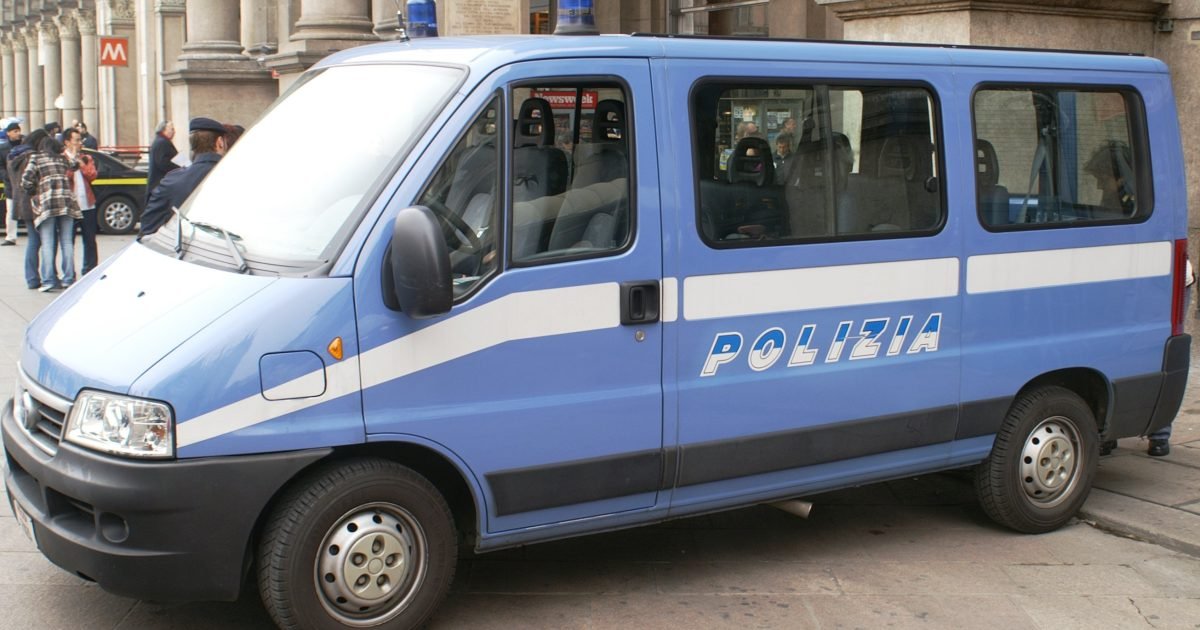
Italian Police via Wikimedia Commons
A gruesome murder near the picturesque Italian city of Florence—known as the birthplace of the Renaissance—has reignited an already heated debate over mass migration, urban decay, and the stark consequences of years of permissive immigration policies pushed by liberal-globalist politicians aligned with Brussels’ agenda.
This week, in Scandicci, a suburb just outside the Tuscan capital, the dismembered and decapitated body of a 44-year-old German woman.
The victim, identified in Italian media as Silke Sauer, was found late Wednesday morning inside a former National Research Council (CNR) site that has been converted into a public park. The area, once intended for research and civic use, has reportedly become a haven for squatters and homeless populations.
Italian authorities have arrested a North African migrant in connection with the killing. The suspect, known to law enforcement for prior drug-related offenses, had reportedly been living illegally inside a bricked-up structure in an abandoned area around where the murder took place.
Investigators say the victim’s body was discovered under a canopy near a dilapidated farmhouse, less than 100 meters from a local high school. The close proximity to an educational institution has further contributed to the outrage felt by residents and national politicians alike.
When police arrived at the scene, they were initially unable to approach the remains because a pit bull allegedly belonging to the suspect was guarding the body. Officers reportedly required nearly an hour to secure the animal before they could begin the forensic work that was required.
A blood-stained machete was later seized from the scene and is being examined as the possible murder weapon. Prosecutors believe the woman’s head was severed and that her body was partially dismembered in what appears to have been an attempt to conceal the crime.
No identification documents were found on the victim, prompting authorities to order DNA testing to formally confirm her identity. An autopsy has also been requested to determine the precise cause and time of death.
The suspect, described in Italian press reports as a North African man with no fixed residence, had reportedly accompanied the victim in the days prior to the killing. He was detained after being taken to a hospital in a drug-induced state and is now under arrest on charges of voluntary manslaughter.
Police had reportedly been called the day before the body was found because a man with a pit bull was allegedly threatening passersby in the same area. Authorities are now examining whether that incident is directly connected to the murder.
Residents describe the former CNR grounds as a “city within a city,” a space increasingly occupied by what they call a “population of invisibles” who seek refuge in abandoned structures after dark. The site lies adjacent to a temporary homeless shelter, highlighting concerns about deteriorating conditions.
Local officials have expressed complete shock at the sheer brutality of the crime. Scandicci Mayor Claudia Sereni called it a “terrible tragedy” and emphasized cooperation with law enforcement, while also referencing broader social challenges linked to marginalization and urban degradation.
The suspect’s prior criminal record has intensified criticism of Italy’s handling of repeat offenders who remain in the country despite convictions. Critics question how illegal migrants with known drug-related offenses continue to circulate freely in vulnerable communities.
The brutal murder has brought immigration policy to the forefront of Italy’s political debate. Leaders from the Lega party have, for a long time, warned that unchecked migration and lax enforcement undermine public safety. They argue that the tragedy reflects systemic failures in migration policy and public security.
Supporters of Matteo Salvini have pointed to the Scandicci case as evidence of what they describe as the costs of Brussels-aligned immigration frameworks that prioritize humanitarian optics over border control and the deportation of criminal illegal migrants.
In recent years, Italy has struggled to manage waves of arrivals across the Mediterranean, with many migrants settling in urban areas already grappling with unemployment and social strain..
The Scandicci killing has also sparked debate over the presence of illegal encampments and squatter communities near residential and school zones. Residents say that bricked-up buildings and abandoned properties have become hubs of illicit activity.
The Florence Public Prosecutor’s Office has now taken formal control of the investigation. Authorities are now working to determine whether the murder happened at the site where the body was discovered by police or whether the body was transported there after the fact.
The post Italy: Beheaded German Woman Found Outside Florence, North African Suspect Taken Into Custody appeared first on The Gateway Pundit.
Politics
From €1.5B to €5B: Did Romania’s Globalist Government Conceal the Real Cost of Supporting Zelensky’s War Effort?

Euro bank notes via Pexels
A heated national debate has erupted in Romania after fresh claims suggested that the true cost of Bucharest’s support for Ukraine may be much higher than the public has been told.
What began as a routine televised discussion on the country’s budget priorities quickly escalated into a broader confrontation over transparency, sovereignty, and the price Romania is paying for its alignment with Brussels’ “prop up the failing Ukrainian state at any cost” policy.
During a recent broadcast, journalist Robert Turcescu pressed former Finance Minister Adrian Câciu on the following question: how much is the Romanian government really spending on Ukraine? The answer he received has fueled growing skepticism toward the government’s official narrative.
Câciu acknowledged that the publicly cited figure of approximately €1.5 billion reflects only direct public expenditures, such as housing, food, and social assistance for Ukrainian refugees inside Romania. But he argued that this figure represents only a fraction of the total fiscal burden ultimately borne by Romanian taxpayers.
According to Câciu, when defense spending, border security operations, and interior ministry costs related to the war are included, the real figure could approach 1.5% of GDP. With Romania’s GDP estimated at roughly €370 billion, that percentage amounts into approximately €5 billion.
The distinction between direct aid and broader security-related expenditures lies at the heart of the controversy. Government officials have emphasized the lower figure, while critics argue that the public deserves a consolidated, transparent accounting of the full cost.
Turcescu reacted sharply to the suggestion that Romania’s total war-related spending could be closer to €5 billion. He publicly questioned why, amid domestic austerity measures and tax increases, such sums would be directed toward Kyiv without full disclosure.
Official data provided by Romania’s Fiscal Council in response to an inquiry from right-wing populist AUR MEP Gheorghe Piperea paint a different picture. According to that response, Romania’s total military, financial, and humanitarian support from February 2022 through mid-2025 amounted to around €1.5 billion — approximately 0.6% of GDP.
That figure would place Romania in the middle tier among European contributors. Countries such as Denmark and Estonia have devoted more than 3% of GDP, while Lithuania, Poland, the Netherlands, Germany, and France have also contributed proportionally more than Romania.
Prime Minister Ilie Bolojan has further stated that direct financial assistance in 2025 amounted to approximately €50 million, largely channeled through NATO mechanisms. However, many military expenditures remain classified through Romania’s Supreme Council of National Defense (CSAT), limiting public oversight.
The result is a widening credibility gap. While the government emphasizes limited direct aid, critics argue that broader institutional and logistical costs — from troop deployments to enhanced border security — are effectively war expenditures that taxpayers ultimately finance.
For nationalist and sovereignty-focused voices across Romania — whose ranks are steadily growing — the issue extends far beyond mere accounting. They contend that Romania, one of the European Union’s less affluent member states, is absorbing significant fiscal strain while domestic sectors face budget cuts and citizens new taxes.
The debate has unfolded against a backdrop of growing public frustration over rising living costs and economic stagnation. An increasing number of Romanians are questioning whether continued financial and logistical backing for Kyiv serves national interests or primarily advances EU geopolitical priorities.
The controversy also intersects with broader political tensions following the annulment of Romania’s presidential election earlier this year, in which conservative candidate Călin Georgescu emerged as a prominent figure. Supporters of Georgescu argue that foreign policy decisions, including Ukraine funding, should be subject to greater democratic scrutiny.
Critics of the current government claim that opaque budgeting practices mirror a wider pattern of centralized decision-making influenced by Brussels. They argue that Romanian citizens are being asked to shoulder burdens without meaningful transparency or parliamentary debate.
Meanwhile, the European Union continues to pressure member states to maintain strong financial and military support for Ukraine, reinforcing perceptions that national sovereignty is subordinated to supranational directives.
The liberal-globalist government, currently suffering from a legitimacy crisis, defiantly maintains that Romania’s role as a frontline NATO and EU state necessitates heightened defense readiness and humanitarian engagement. Officials argue that security expenditures would have risen regardless, given the regional instability caused by the war.
Despite that, strong skepticism persists. Critics of the government’s Brussels-aligned policy question whether indirect costs attributed to the “context of war” are being used to mask policy choices that deserve clearer political accountability.
At a time when many European economies face ever increasing fiscal pressures, the Romanian debate reflects a broader reckoning across the Old Continent over the long-term sustainability of Ukraine-related commitments. Transparency, opponents argue, is essential to maintaining public trust.
The absence of a detailed, consolidated report outlining both direct and indirect war-related expenditures has only intensified suspicions. Calls are growing for a full parliamentary review of Romania’s total financial exposure.
Until a comprehensive breakdown is made public, the controversy is unlikely to fade. In a period marked by economic uncertainty and political realignment, Romania’s Ukraine policy has become a lightning rod for deeper debates about sovereignty, transparency, and national priorities.
The post From €1.5B to €5B: Did Romania’s Globalist Government Conceal the Real Cost of Supporting Zelensky’s War Effort? appeared first on The Gateway Pundit.

NYT Connections Sports Edition today: Hints and answers for February 21, 2026

Justin Quiles & Lenny Tavárez’s ‘Superarte’ Album & More Best New Music Latin

How to watch Atalanta vs. Napoli online for free

Send Help review: GLOP! Youre not ready for Rachel McAdams latest… but I love it
How I Paid Off My Mortgage 10 Years Early On A Teacher’s Salary

Black Lives Matter Activist in Boston Pleads Guilty to Federal Fraud Charges – Scammed Donors to Fund Her Lifestyle
-
 Tech4 weeks ago
Send Help review: GLOP! Youre not ready for Rachel McAdams latest… but I love it
-
Business5 months ago
How I Paid Off My Mortgage 10 Years Early On A Teacher’s Salary
-
 Politics5 months ago
Black Lives Matter Activist in Boston Pleads Guilty to Federal Fraud Charges – Scammed Donors to Fund Her Lifestyle
-

 Tech6 months ago
Get a lifetime subscription to the “ChatGPT for investors” for under $60
-

 Tech5 months ago
Review: The Dreame H15 Pro CarpetFlex is the first wet/dry vacuum I liked
-
Business6 months ago
25 Low-Effort Side Hustles You Can Start This Weekend
-
Business6 months ago
9 Ways to Command a Six-Figure Salary Without a Bachelor’s
-

 Entertainment4 months ago
Fat Joe Recalls Bruno Mars Snapping on Him Over Question About Puerto Rican Roots: ‘Broke My Heart’