
Tech
Applicants say AI is making the job market hell. OpenAI wants to help.

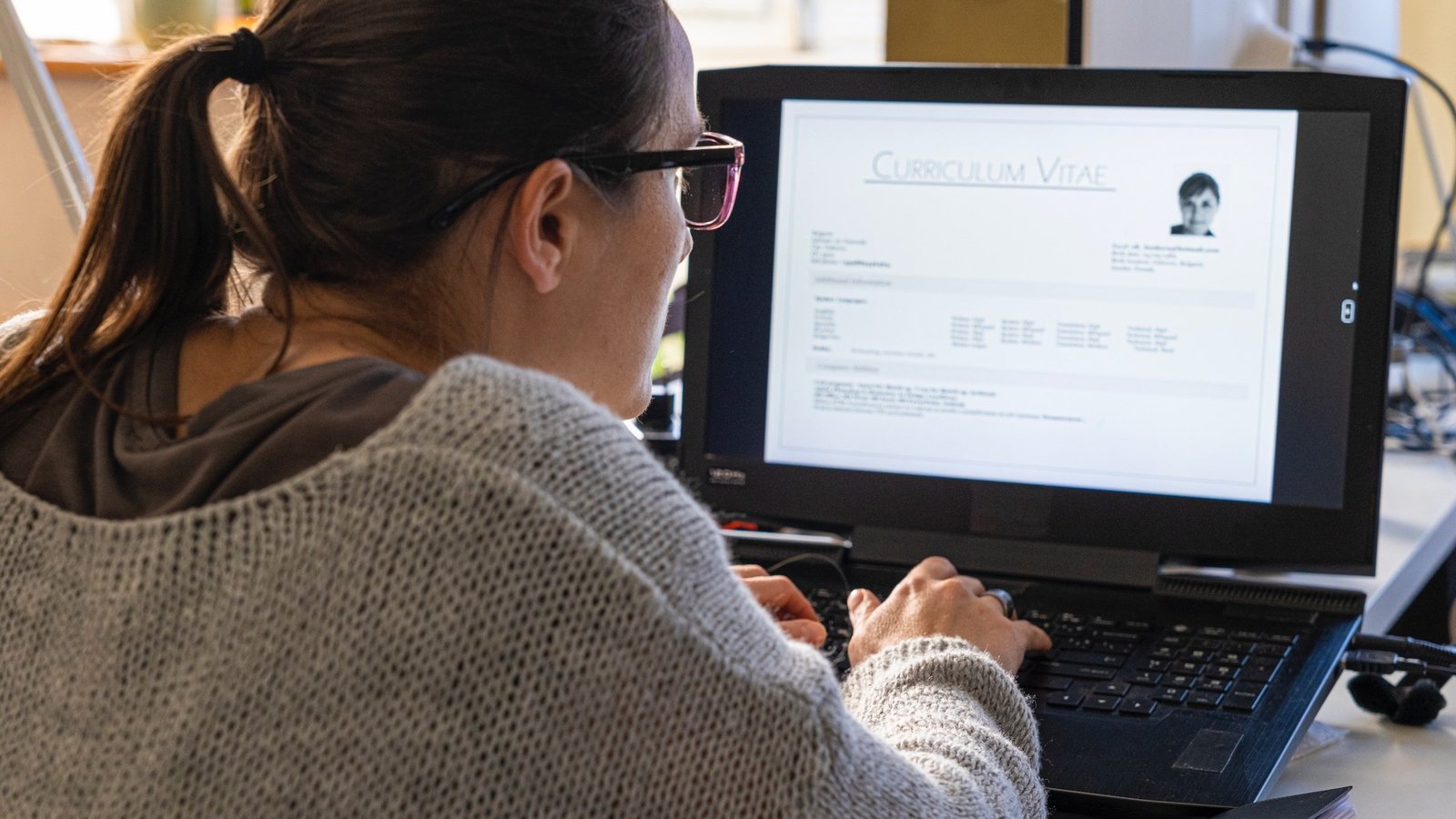
Last week, The Atlantic published a story with a very frank headline: "The Job Market Is Hell." The piece describes a frustrating situation for job seekers and hiring managers alike: "Young people are using ChatGPT to write their applications; HR is using AI to read them; no one is getting hired." Surveys also show growing anxiety about generative AI and its effect on jobs. A recent Reuters Ipsos poll found that 71 percent of respondents said "they were concerned that AI will be 'putting too many people out of work permanently.'"
Perception doesn't always match reality, but in this case, the job market really is facing headwinds. The Washington Post reported today that long-term unemployment is at a post-pandemic high; in a report on the weak labor market, NBC News cited Citi analysts who reported "near-zero job growth" in recent months; and a study by three Stanford economists recently found that AI is already decreasing job openings for software developers.
Reports like these paint a bleak picture for job applicants. But this month, OpenAI announced that it wants to help job seekers and employers by launching an AI-powered hiring platform. According to TechCrunch, the job platform would compete with LinkedIn and is set to launch in 2026.
The new product, which OpenAI outlines in a blog post, would work similarly to other AI-powered job platforms.
In short, the OpenAI Jobs Platform would help employers find AI-savvy employees to hire for whatever needs the company has. OpenAI says it's been working with tons of businesses like Walmart, various consulting firms, and even state government agencies to find out what modern businesses are looking for in terms of AI.
On its face, the concept sounds like an AI-focused version of LinkedIn, where people would create resumes on the platform and be matched up with jobs that fit that description using, of course, AI. In addition to LinkedIn, hiring platforms like Hiring.cafe and Sonara are already trying to fill this niche in the job market
OpenAI also announced that it will start its own AI certification program. This actually started earlier this year with the launch of OpenAI Academy, an online class program to instruct people on how to use AI better at work. The OpenAI academy will start issuing certifications to people who complete the courses, and those certifications will be shown to potential employers. (LinkedIn has its own certificate program.)
As generative AI causes new challenges and anxieties for job seekers, OpenAI clearly believes it can also solve some of these problems. In a blog post about the OpenAI Jobs Platform, Fidji Simo, OpenAI’s new CEO of Applications, wrote that she believes “AI will unlock more opportunities for more people than any technology in history.”
For job seekers, it may be hard to square this utopian vision with recent comments from Anthropic CEO Dario Amodei, who famously predicted that AI could destroy half of all entry-level white-collar jobs by 2030. In addition, LinkedIn already offers many of the tools OpenAI hopes to deliver with its own job platform, and in a tough job market, LinkedIn has hardly been a silver bullet.
Disclosure: Ziff Davis, Mashable’s parent company, in April filed a lawsuit against OpenAI, alleging it infringed Ziff Davis copyrights in training and operating its AI systems.

Today's NYT Strands hints are easy if you're rowdy.
Strands, the New York Times' elevated word-search game, requires the player to perform a twist on the classic word search. Words can be made from linked letters — up, down, left, right, or diagonal, but words can also change direction, resulting in quirky shapes and patterns. Every single letter in the grid will be part of an answer. There's always a theme linking every solution, along with the "spangram," a special, word or phrase that sums up that day's theme, and spans the entire grid horizontally or vertically.
By providing an opaque hint and not providing the word list, Strands creates a brain-teasing game that takes a little longer to play than its other games, like Wordle and Connections.
If you're feeling stuck or just don't have 10 or more minutes to figure out today's puzzle, we've got all the NYT Strands hints for today's puzzle you need to progress at your preferred pace.
NYT Strands hint for today’s theme: Hullabaloo
The words are related to sound.
Today’s NYT Strands theme plainly explained
These words describe ruckus.
NYT Strands spangram hint: Is it vertical or horizontal?
Today's NYT Strands spangram is horizontal.
NYT Strands spangram answer today
Today's spangram is Lets Get Loud.
Mashable 101 Fan Fave: Nominate your favorite creators today
NYT Strands word list for April 24
-
Shout
-
Holler
-
Clamor
-
Lets Get Loud
-
Bellow
-
Whoop
-
Caterwaul
Looking for other daily online games? Mashable's Games page has more hints, and if you're looking for more puzzles, Mashable's got games now!
Check out our games hub for Mahjong, Sudoku, free crossword, and more.
Not the day you're after? Here's the solution to yesterday's Strands.

Today's Wordle answer should be easy to solve if you love a good drink.
If you just want to be told today's word, you can jump to the bottom of this article for today's Wordle solution revealed. But if you'd rather solve it yourself, keep reading for some clues, tips, and strategies to assist you.
Where did Wordle come from?
Originally created by engineer Josh Wardle as a gift for his partner, Wordle rapidly spread to become an international phenomenon, with thousands of people around the globe playing every day. Alternate Wordle versions created by fans also sprang up, including battle royale Squabble, music identification game Heardle, and variations like Dordle and Quordle that make you guess multiple words at once.
Wordle eventually became so popular that it was purchased by the New York Times, and TikTok creators even livestream themselves playing.
What's the best Wordle starting word?
The best Wordle starting word is the one that speaks to you. But if you prefer to be strategic in your approach, we have a few ideas to help you pick a word that might help you find the solution faster. One tip is to select a word that includes at least two different vowels, plus some common consonants like S, T, R, or N.
What happened to the Wordle archive?
The entire archive of past Wordle puzzles was originally available for anyone to enjoy whenever they felt like it, but it was later taken down, with the website's creator stating it was done at the request of the New York Times. However, the New York Times then rolled out its own Wordle Archive, available only to NYT Games subscribers.
Is Wordle getting harder?
It might feel like Wordle is getting harder, but it actually isn't any more difficult than when it first began. You can turn on Wordle's Hard Mode if you're after more of a challenge, though.
Here's a subtle hint for today's Wordle answer:
Intoxicated.
Does today's Wordle answer have a double letter?
There are no recurring letters.
Mashable 101 Fan Fave: Nominate your favorite creators today
Today's Wordle is a 5-letter word that starts with…
Today's Wordle starts with the letter D.
The Wordle answer today is…
Get your last guesses in now, because it's your final chance to solve today's Wordle before we reveal the solution.
Drumroll please!
The solution to today's Wordle is…
DRUNK
Don't feel down if you didn't manage to guess it this time. There will be a new Wordle for you to stretch your brain with tomorrow, and we'll be back again to guide you with more helpful hints. Are you also playing NYT Strands? See hints and answers for today's Strands.
Reporting by Chance Townsend, Caitlin Welsh, Sam Haysom, Amanda Yeo, Shannon Connellan, Cecily Mauran, Mike Pearl, and Adam Rosenberg contributed to this article.
If you're looking for more puzzles, Mashable's got games now! Check out our games hub for Mahjong, Sudoku, free crossword, and more.
Not the day you're after? Here's the solution to yesterday's Wordle.

The Federal Communications Commission is using the presence of "controversial gender identity issues" in children's television programming as a pretense for questioning how TV ratings are developed and enforced, according to a notice published Wednesday by the federal agency.
The notice generally assesses TV ratings, but specifically points out that these industry guidelines have rated shows featuring "transgender and gender non-binary programming" as appropriate for children. It argues that parents aren't provided this information, "thereby undermining the ability of parents to make informed choices for their families."
In the document, the FCC poses a series of open-ended questions about TV ratings development, including whether the board responsible for the guidelines is "sufficiently balanced" with viewpoints outside of the entertainment industry and if faith-based organizations should be represented in the body.
"What more could the board do to include family-oriented perspectives — which are not well represented in the media industry — in its ratings process?" the notice asks.
FCC Chairman Brendan Carr announced the public notice on X, explaining that "parents have raised concerns with the industry's approach." He added that these parents believe "New York & Hollywood programmers" promote objectionable content in kids programming without disclosing that to parents. Carr didn't mention gender identity in his X post.
This Tweet is currently unavailable. It might be loading or has been removed.
TV parents guidelines can include both a rating as well as descriptors for content that includes crude language, sexual situations, and violence.
LGBTQ+ advocates criticized the public notice, arguing that it amounted to discrimination and censorship.
"Trump's FCC is trying to turn transgender people into a warning label," Tyler Hack, executive director of the transgender rights advocacy group Christopher Street Project, said in a statement. "It is dehumanizing, and it is part of a broader political strategy to stigmatize LGBTQ+ people in every corner of public life."
Sarah Kate Ellis, president and CEO of GLAAD, described the notice as government overreach.
"Media companies must be allowed to create and broadcast stories that reflect one-quarter of their audience without interference from a government agency with its own anti-transgender political agenda," Ellis said in a statement.
This isn't the first time Carr has been accused of censorship. Carr has claimed broadcasters air "hoaxes" and "news distortions" that also happen to be unfavorable to President Trump. Carr has suggested the licenses of such broadcasters won't be renewed.
In March, dozens of free speech experts argued in an open letter to Carr that his threats against broadcasters are "unlawful jawboning" and his vague characterization of "fake news" violates the First Amendment. The authors called on Carr to "withdraw" his threats.

Which New Music Release Is Your Favorite This Week? Vote!
Celeb-Loved Juicy Couture T-Shirts Are On Sale for $8 Right Now (If You Hurry)
Head Back to Hawkins With New ‘Stranger Things: Tales From ’85’ Soundtrack

SEND IN THE TROOPS! At Least 5 Dead, 10 Wounded So Far in Chicago Weekend Shootings
How I Paid Off My Mortgage 10 Years Early On A Teacher’s Salary

Black Lives Matter Activist in Boston Pleads Guilty to Federal Fraud Charges – Scammed Donors to Fund Her Lifestyle
-
 Politics1 year ago
SEND IN THE TROOPS! At Least 5 Dead, 10 Wounded So Far in Chicago Weekend Shootings
-
Business1 year ago
How I Paid Off My Mortgage 10 Years Early On A Teacher’s Salary
-
 Politics1 year ago
Black Lives Matter Activist in Boston Pleads Guilty to Federal Fraud Charges – Scammed Donors to Fund Her Lifestyle
-

 Tech1 year ago
Get a lifetime subscription to the “ChatGPT for investors” for under $60
-

 Tech1 year ago
Review: The Dreame H15 Pro CarpetFlex is the first wet/dry vacuum I liked
-
 Tech1 year ago
How much does the Roborock Saros Z70 cost? And does it ever go on sale?
-
Business1 year ago
25 Low-Effort Side Hustles You Can Start This Weekend
-
Business1 year ago
9 Ways to Command a Six-Figure Salary Without a Bachelor’s